how to draw a dog
Simple how- to- draw a dog step-by-step instructions below. By following this lesson anyone can learn to illustrate a dog. First graders like this project + there is room for self expression to customize.
Scroll down to find:
- photographs of dogs 4 reference
- step-by-step instructions with pictures of the project
- a lesson plan (including California State Visual Art Standards)
dog reference images
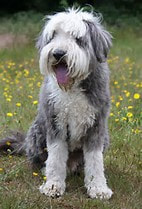
|
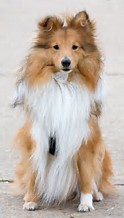
|

|
step-by-step instructions

1. large oval - above pg center for head
|
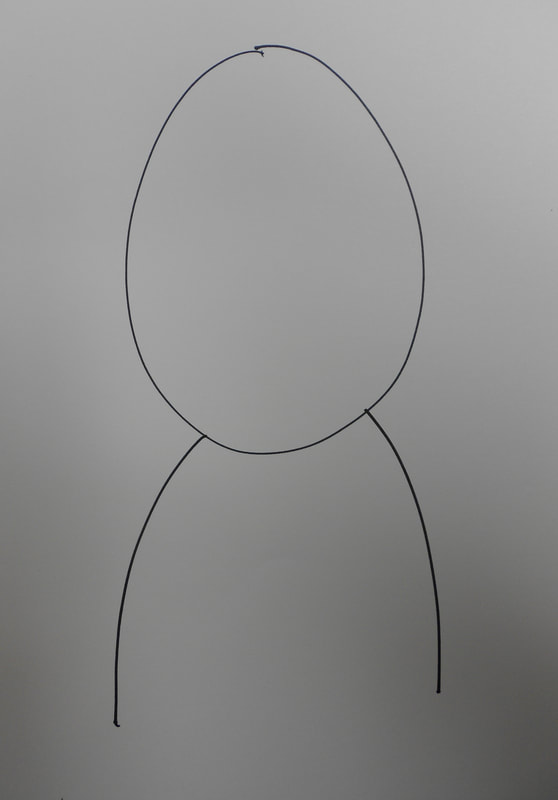
2. notice placement - 2 curve lines downward
|
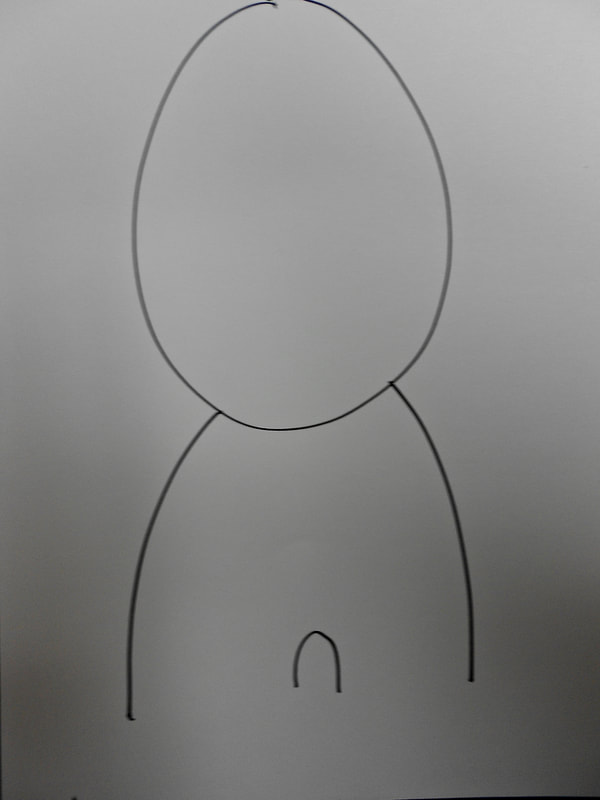
3. small upside-down u-shape centered between last step
|
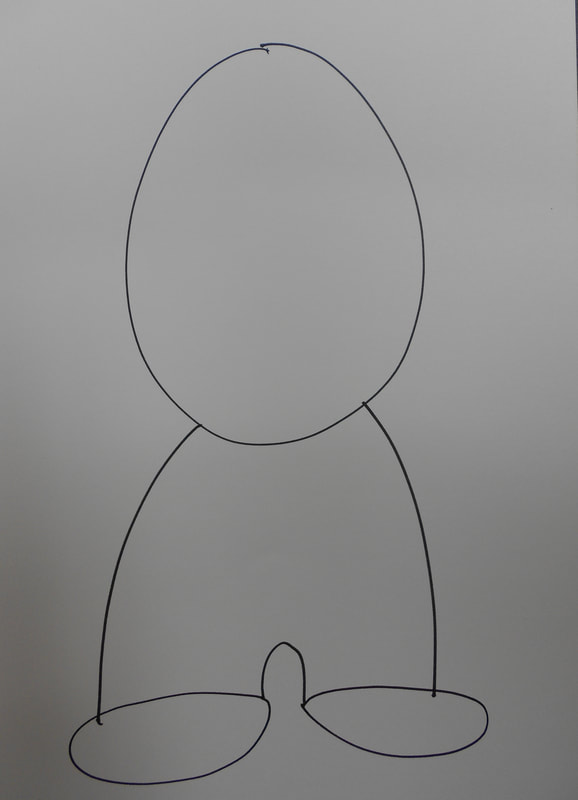
4. ovals for feet
|
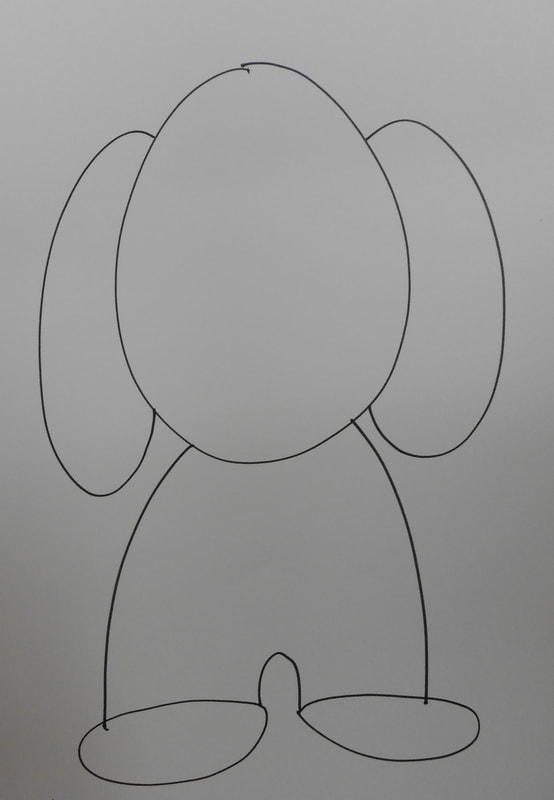
5. 2 partial ovals - large - on each side of head-shape
|
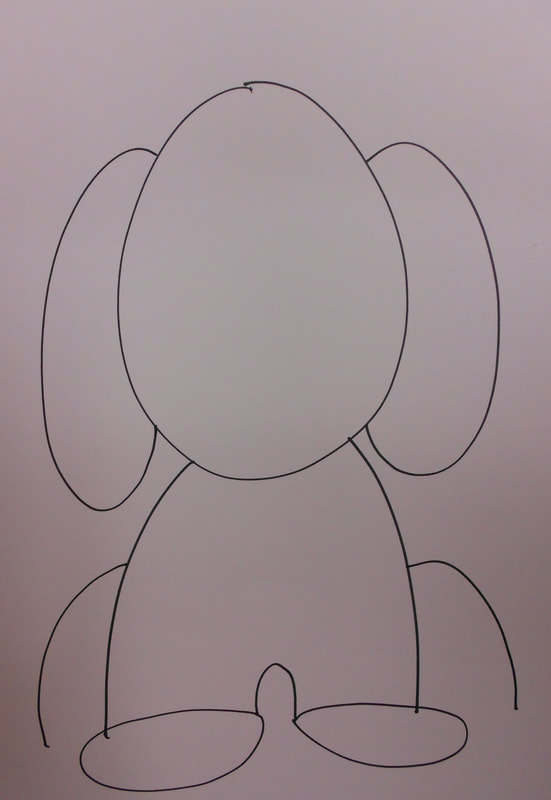
6. 2 curved lines - notice placement
|
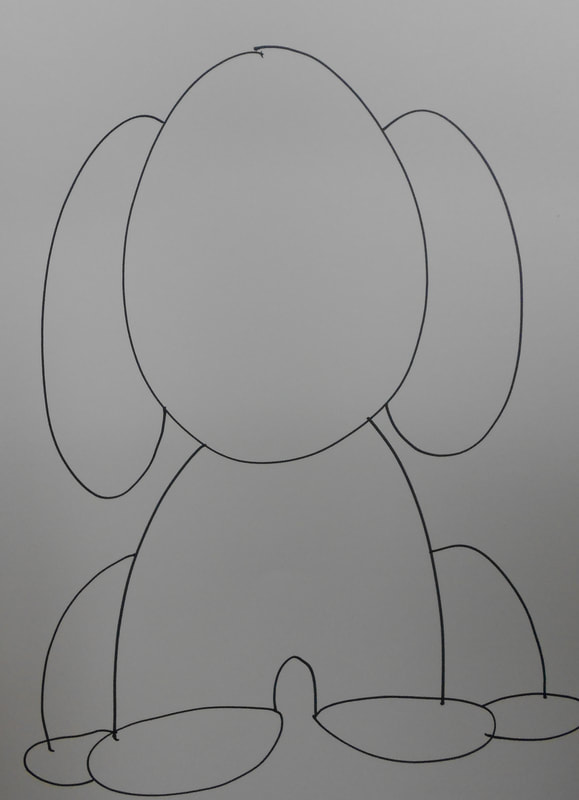
7. partial ovals on each side - notice higher up than 1st set of feet
|
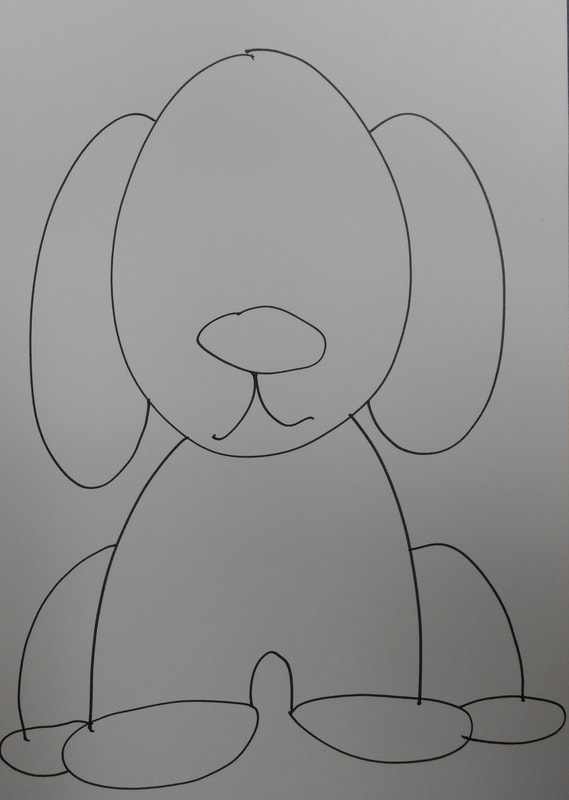
8. horizontal oval below center of head - 2 curved lines under oval
|
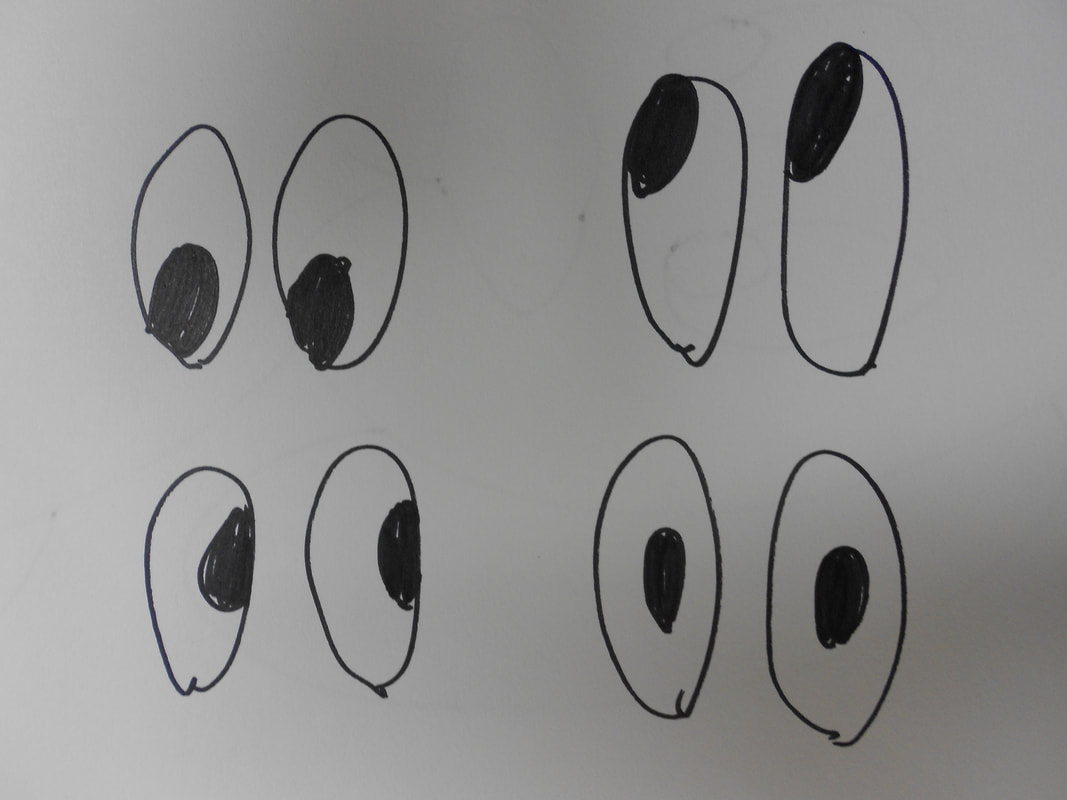
9. choices for dark oval inside eye oval - notice placement - students choose the look they want - placement of dark oval shows where dog is looking (e.g. up, down, right, straight ahead, etc. )
|
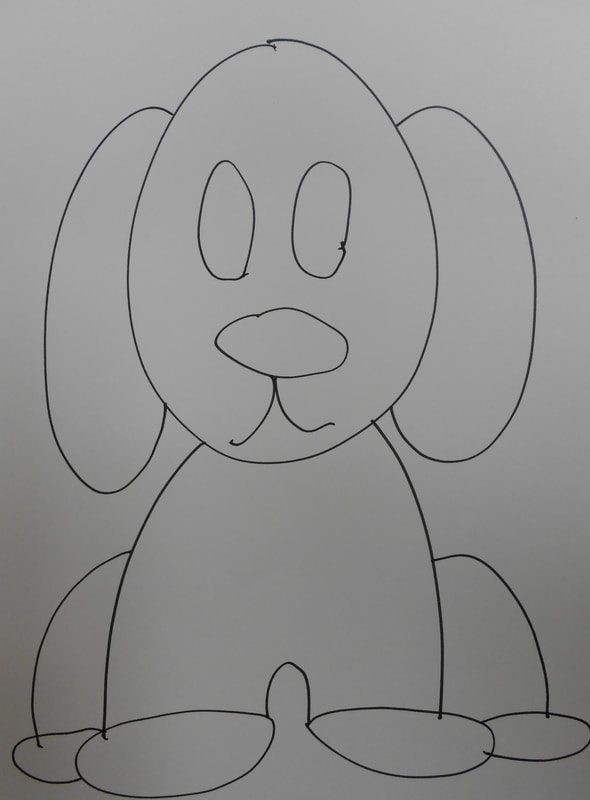
10. 2 vertical ovals above nose for eyes
|
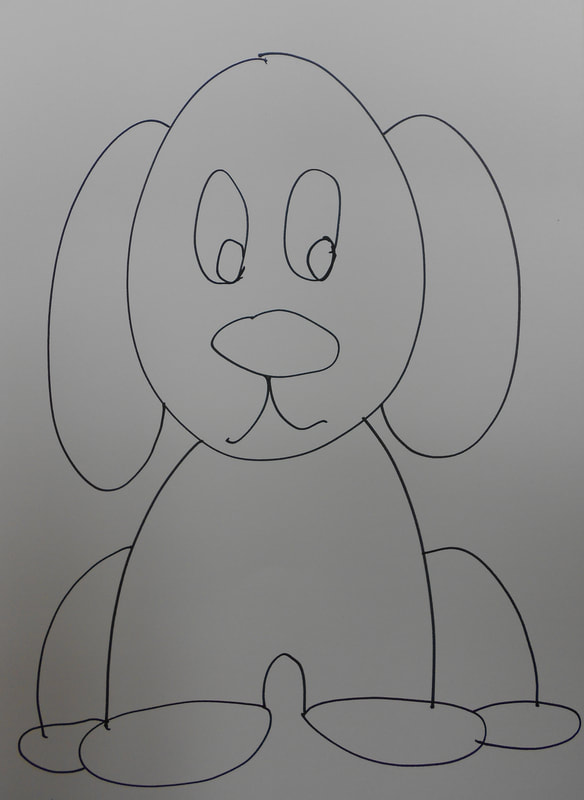
11. smaller ovals inside eye oval for pupil
|
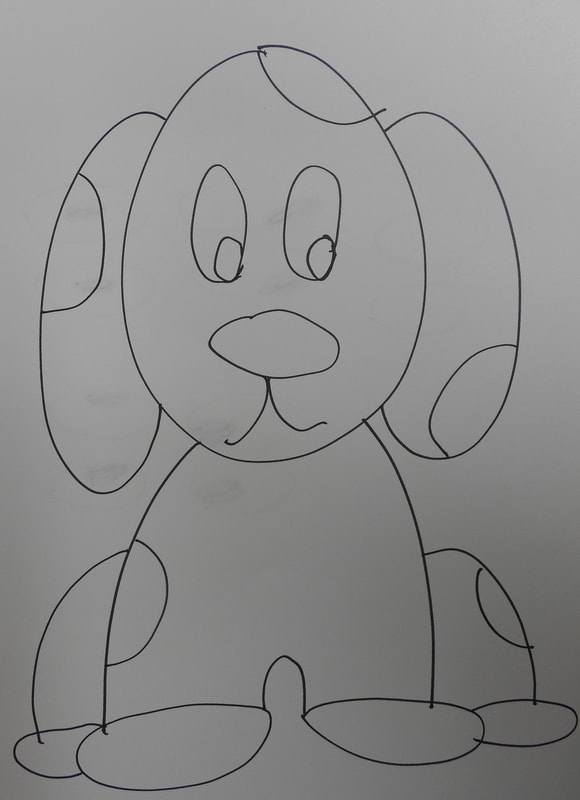
12. curves for dog spots - students choose how many + where
|
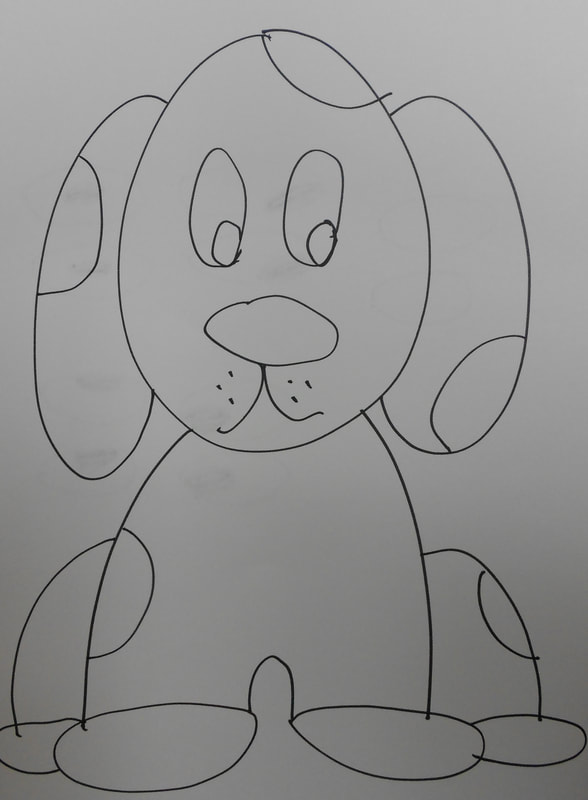
13. 3 spots each side of n\mouth under oval nose shape
|
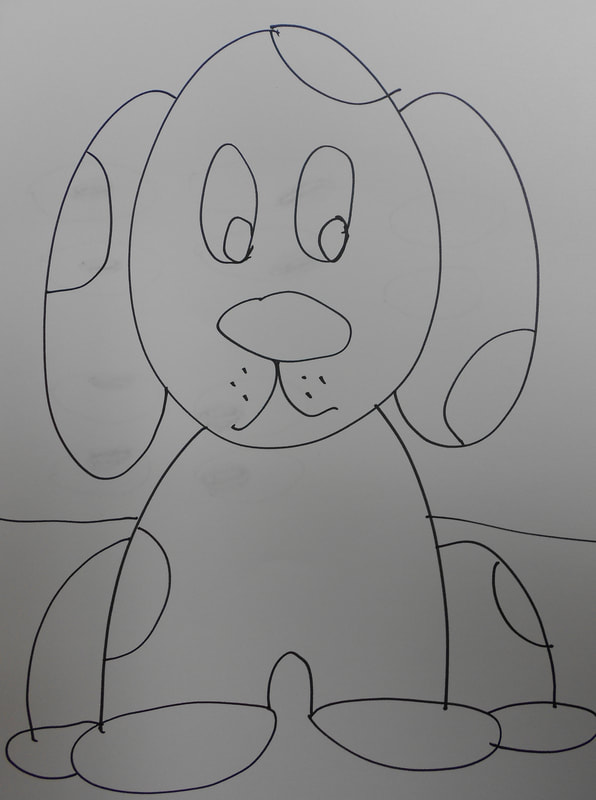
14. draw a horizontal line across page - do not draw line thru dog
|
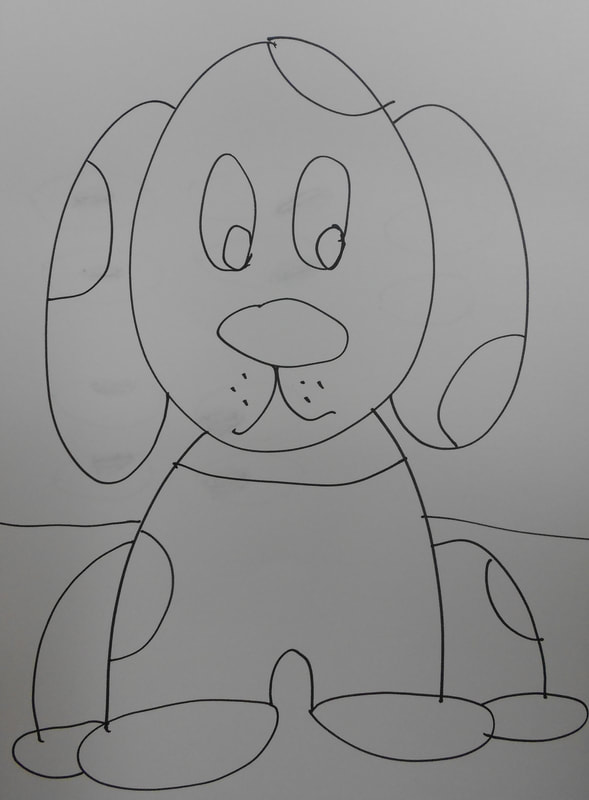
15. curve under head for collar
|
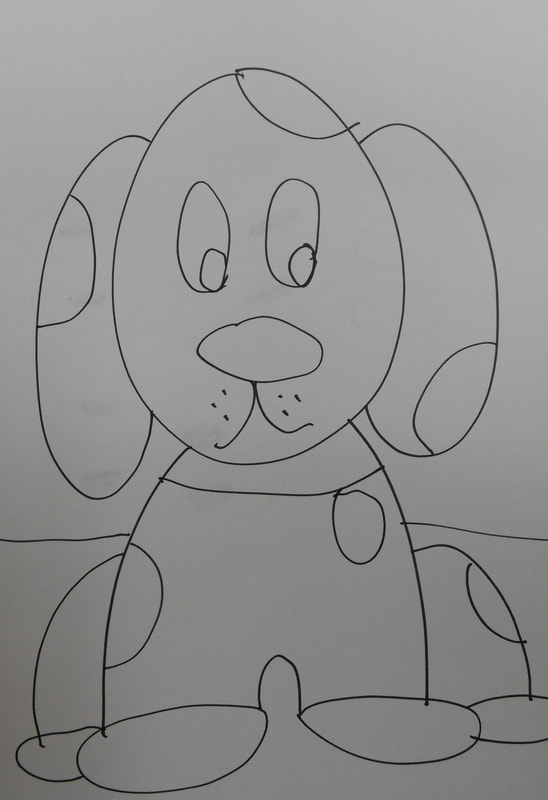
16. oval on collar for dog tag/licence
|
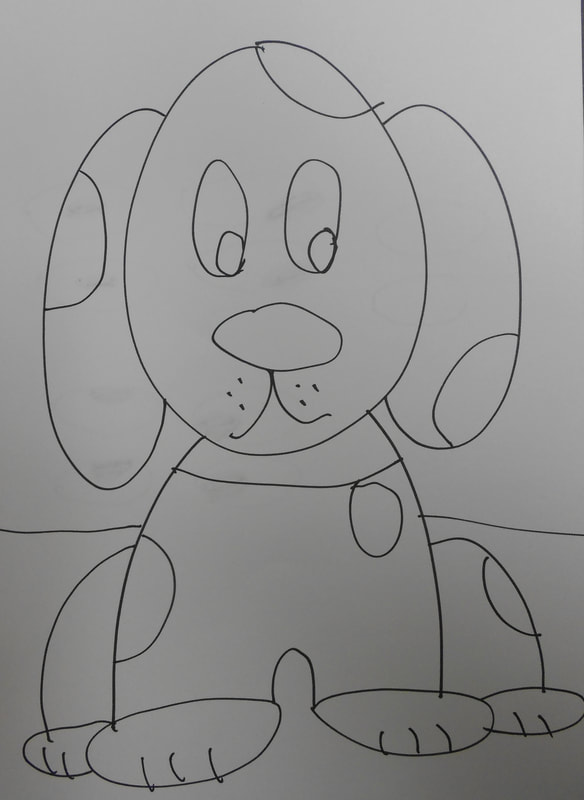
17. draw lines on feet for toes as shown
|
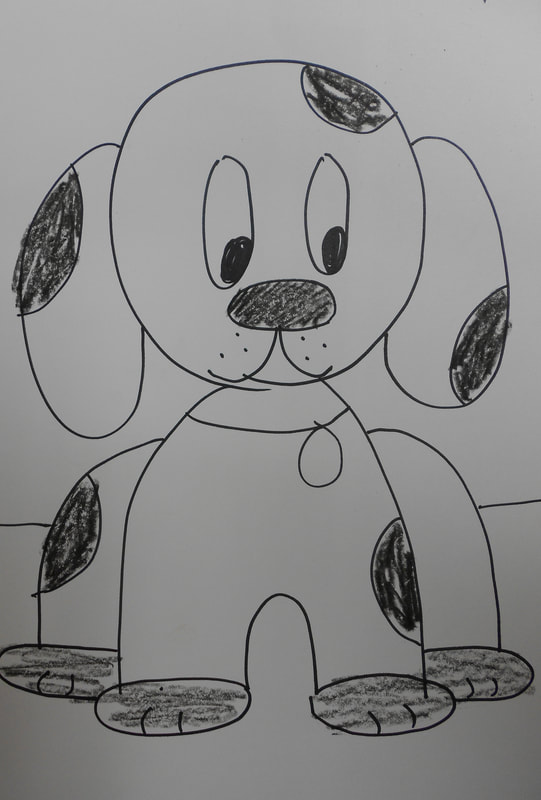
18. nose, feet,+ spots color black
|
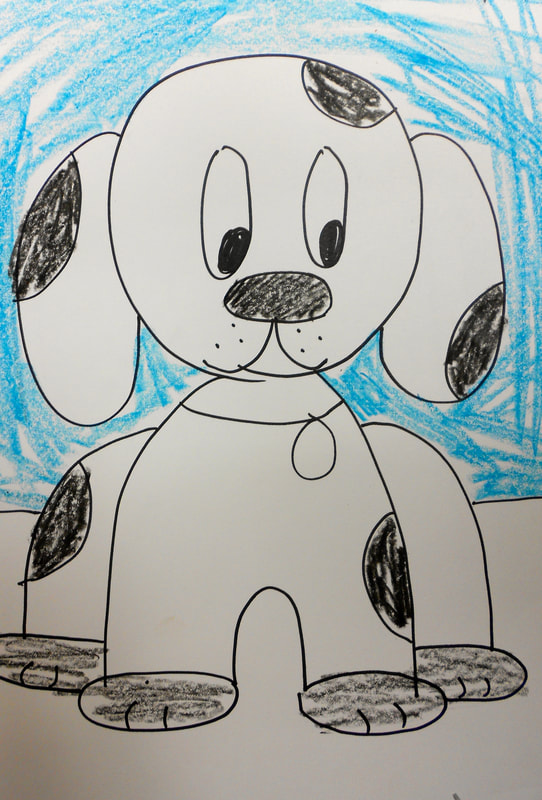
19. color blue sky above horizon line to top of page
|
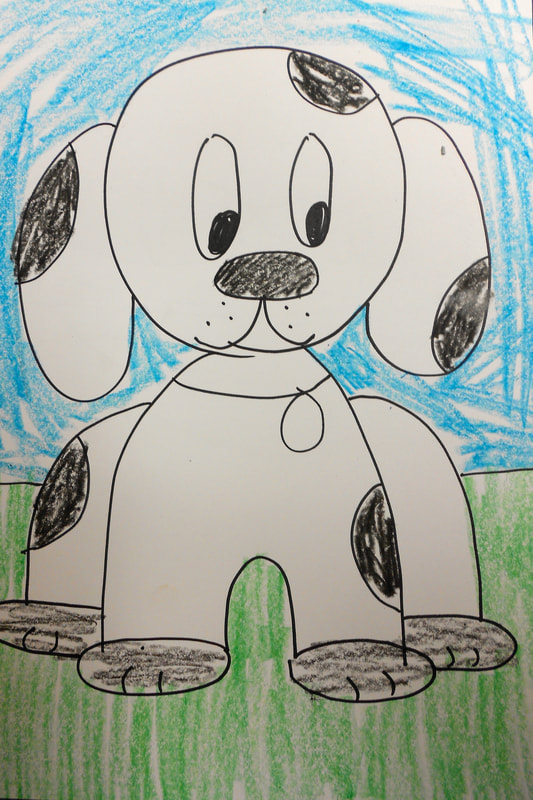
20. color green grass below horizon line
|
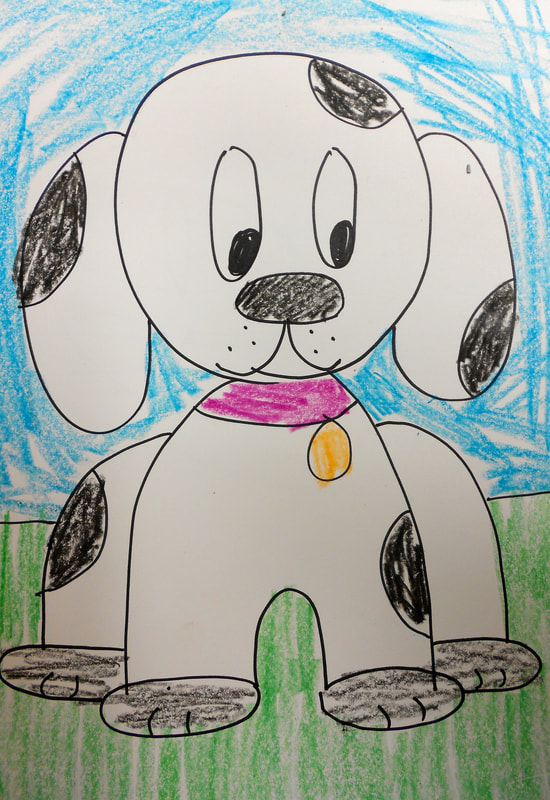
21. student choice for collar = tag color
|
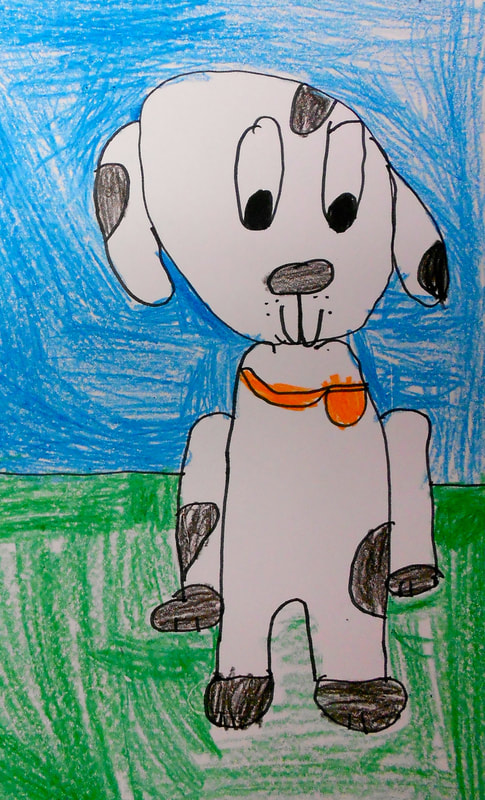
22. completed drawing
|
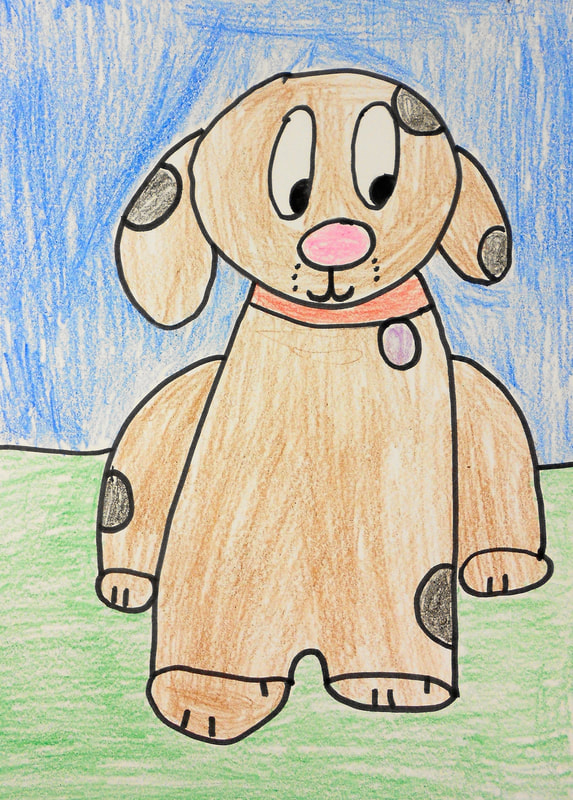
23. alternative - brown body color
|
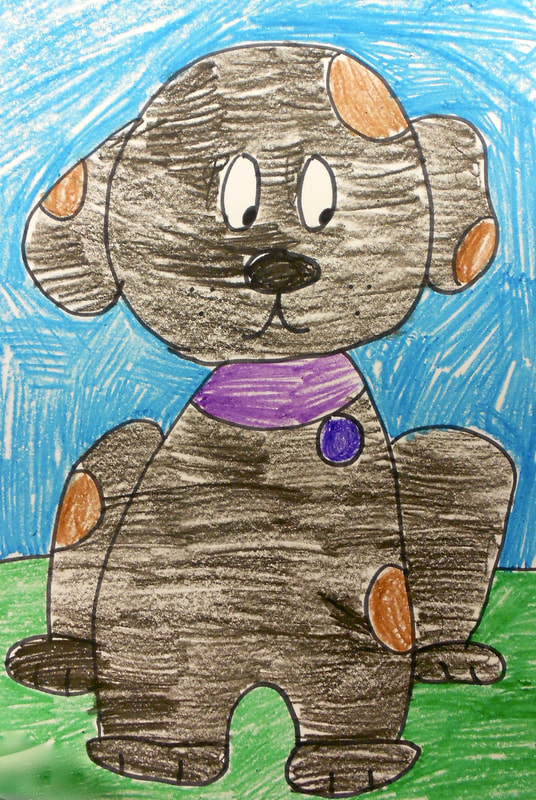
24. alternative finished project - black dog - brown spots
|
objective
Students will be able to draw a simple dog. They will learn + know how placement of pupils shows how an artist can have direction in their piece. Students will know how to draw a horizon line look like it is behind an image in their art.
materials
- 9"x12" white drawing paper
- pencils
- erasers
- crayons
activity
1. Show students examples of pictures of dogs.
2. Demonstrate step 9 by looking in directions, while having students witness the differences.
4. Have student helpers to pass out materials.
5. Assure that student's pages are in the vertical direction prior to starting step #1.
6. Leave 5-10 minutes for clean-up.
2. Demonstrate step 9 by looking in directions, while having students witness the differences.
4. Have student helpers to pass out materials.
5. Assure that student's pages are in the vertical direction prior to starting step #1.
6. Leave 5-10 minutes for clean-up.
vocabulary
- background - The part of a picture plane that seems to be farthest from the viewer.
- color - The visual sensation dependent on the reflection or absorption of light from a given surface. The three characteristics of color are hue, value, and intensity.
- composition - The organization of elements in a work of art.
- contour drawing - The drawing of an object as though the drawing tool is moving along all the edges and ridges of the form.
- focal point - The place in a work of art on which attention becomes centered because of an element emphasized in some way.
- harmony - The principle of design that combines elements in a work of art to emphasize the similarities of separate but related parts.
- line - A point moving in space. Line can vary in width, length, curvature, color, or direction.
- organic - Refers to shapes or forms having irregular edges or to surfaces or objects resembling things existing in nature.
- pattern - Anything repeated in a predictable combination.
- Shape - A two-dimensional are or plane that may be open or closed, free-form or geometric. It can be found in nature or is made by humans.
- Space - An area in which objects or images can exist.
- Still Life - Arrangement or work of art showing a collection of inanimate objects.
- texture - The surface quality of materials either actual (tactile) or implied (visual). It is one of the elements of art.
- Unity - Compositional similarity, oneness, togetherness, or cohesion. Total visual effect in a composition achieved by the careful blending of elements of art and principles of design.
- variety - A principle of art concerned with combining one or more elements of art in different ways to create interest.
- value - The lightness or darkness of a hue or neutral color. A value scale shows the range of values from black to white.
- warm colors - Colors suggesting warmth: red, yellow, and orange.
variation
- use an alternative medium to draw + color illustration (e.g. pastels, watercolor paints, tempera paints, oil pastels)
- use a larger piece of drawing paper
- have students add personal details, such as; bone in dog's mouth, bowl of food, ball, or toy
ca state visual art standards
1.0 ARTISTIC PERCEPTION
Develop Perceptual Skills and Visual Arts Vocabulary
1.1 Describe and replicate repeated patterns in nature, in the environment, and in works of art.
3.0 HISTORICAL AND CULTURAL
Understanding the Historical Contributions and Cultural Dimensions of the Visual Arts
3.2 Identify and describe various subject matter in art (e.g., landscapes, seascapes, portraits, still life)
Develop Perceptual Skills and Visual Arts Vocabulary
1.1 Describe and replicate repeated patterns in nature, in the environment, and in works of art.
3.0 HISTORICAL AND CULTURAL
Understanding the Historical Contributions and Cultural Dimensions of the Visual Arts
3.2 Identify and describe various subject matter in art (e.g., landscapes, seascapes, portraits, still life)