How to paint flowers in vase
Learn to draw a still life of flowers in a vase. The examples below are from a K/1 class. Lesson includes easy to follow step-by-step instructions with a child's project shown completed.
Scroll down to find:
Scroll down to find:
- photographs of floral sill life examples 4 reference
- step-by-step instructions with pictures of the project
- a lesson plan (including California State Visual Art Standards)
reference images
The following are paintings + realistic photos of the flowers used in this lesson.
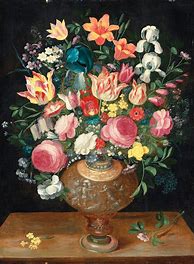
|
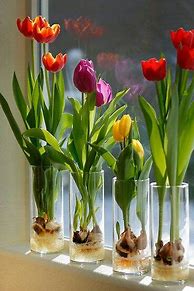
|
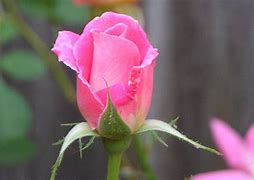
|
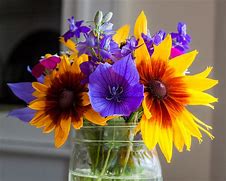
|
step-by-step instructions
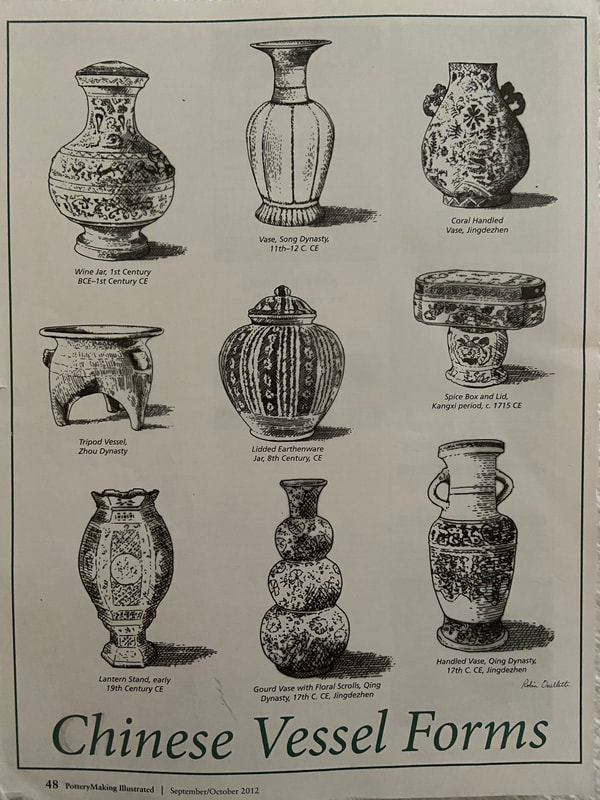
clip of vessels, vases
|
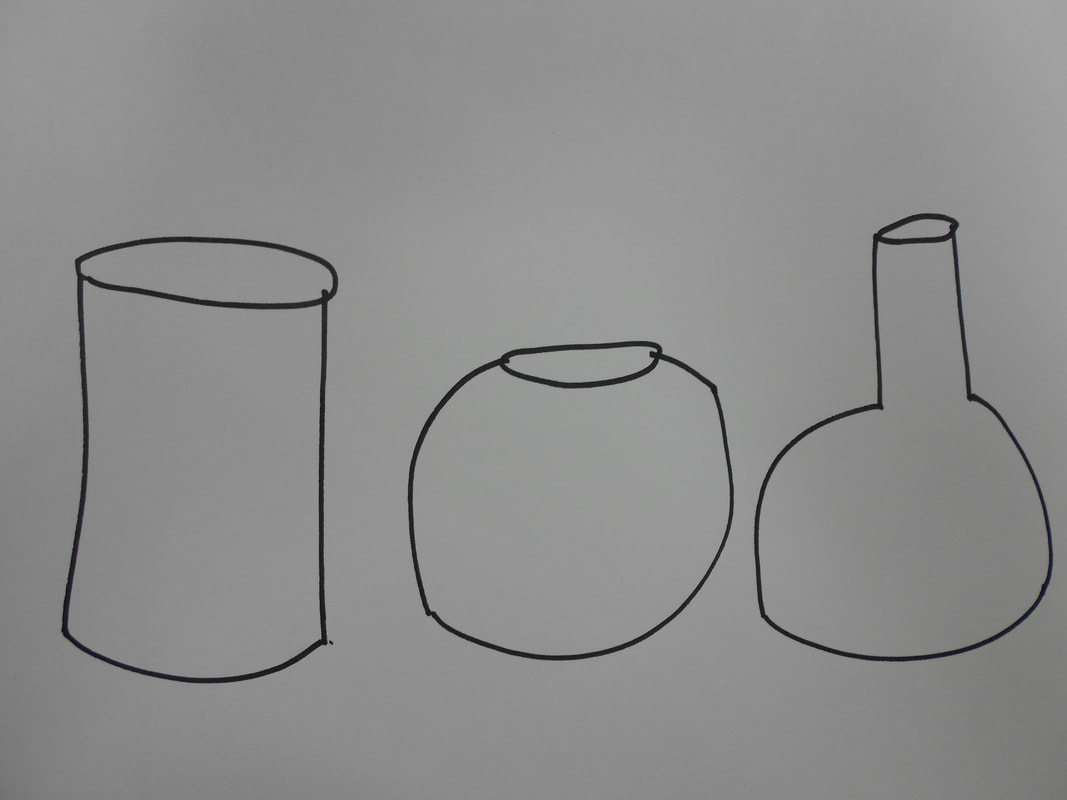
3 simple shaped vases students choose from
|
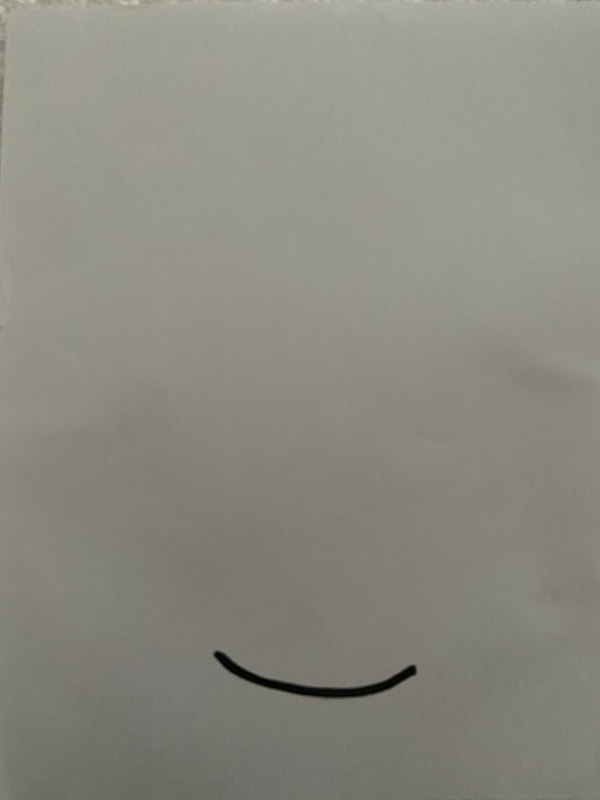
slight curve
|
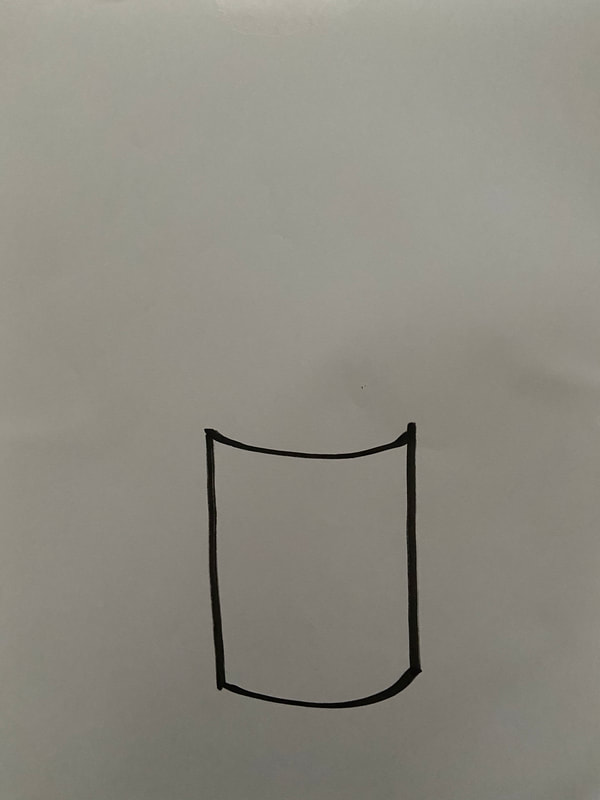
vertical lines for sides
|
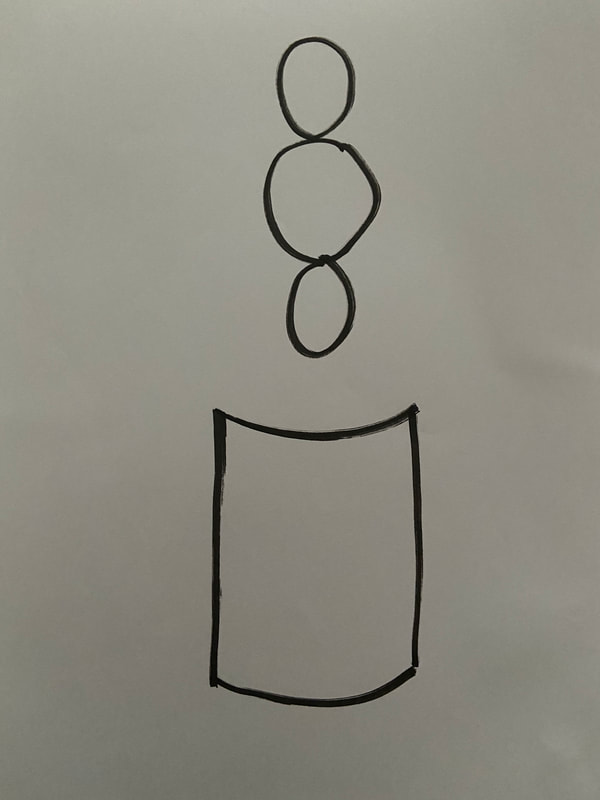
center, largest circle, ovals top + bottom - same size
|
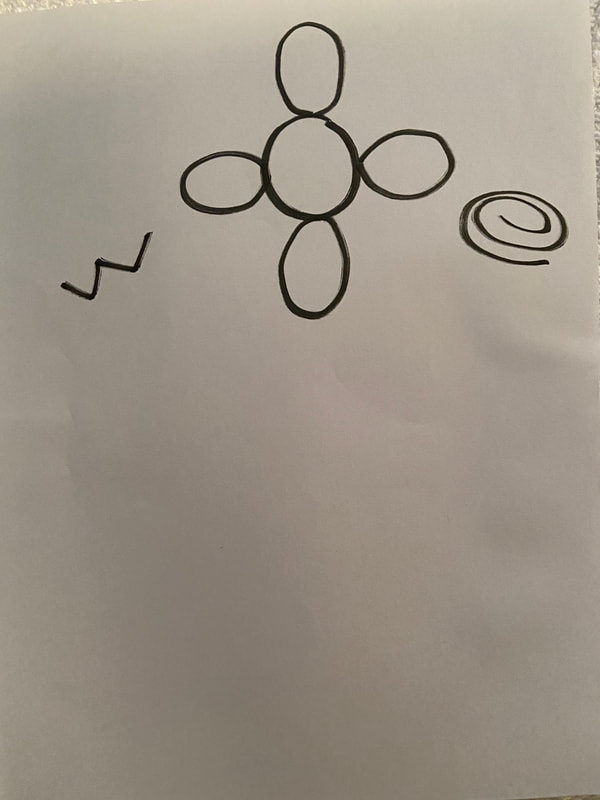
continue ovals on sides - start of rose bud + tulip
|
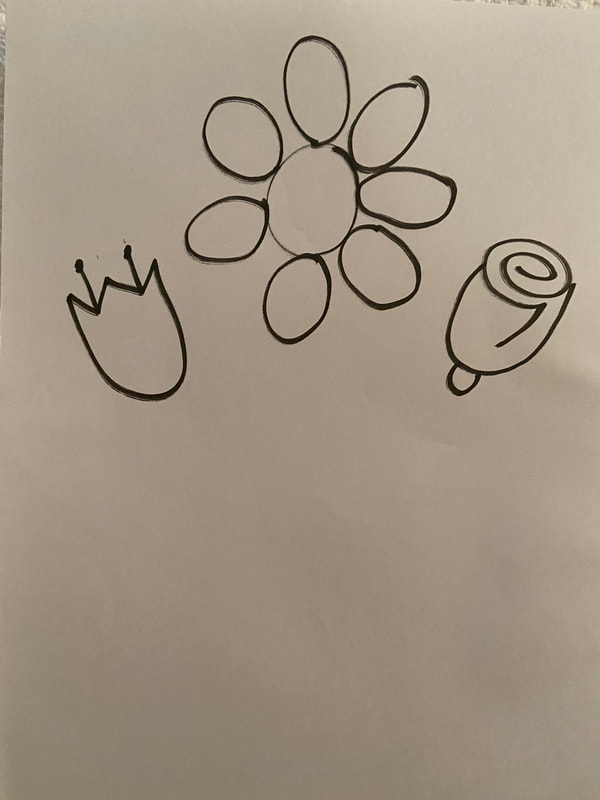
continue petals +tulip + rose bud
|
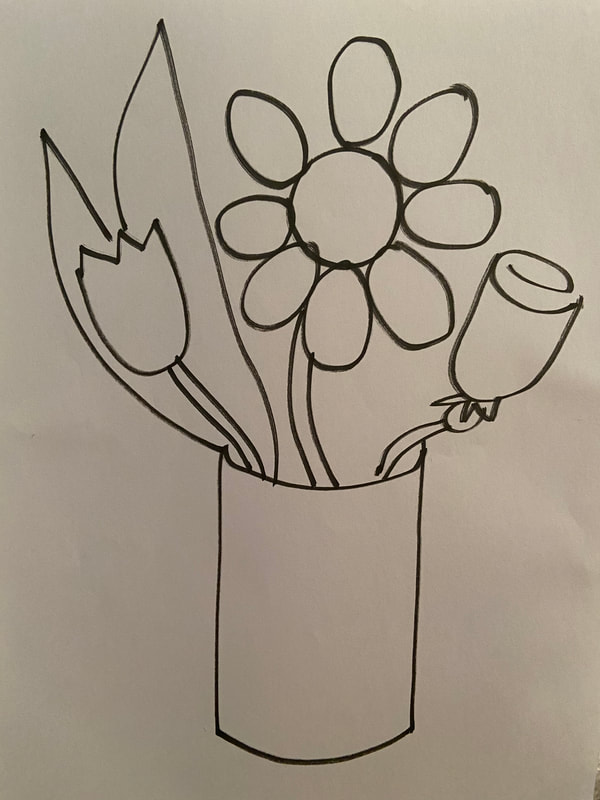
flower stems into vase
|
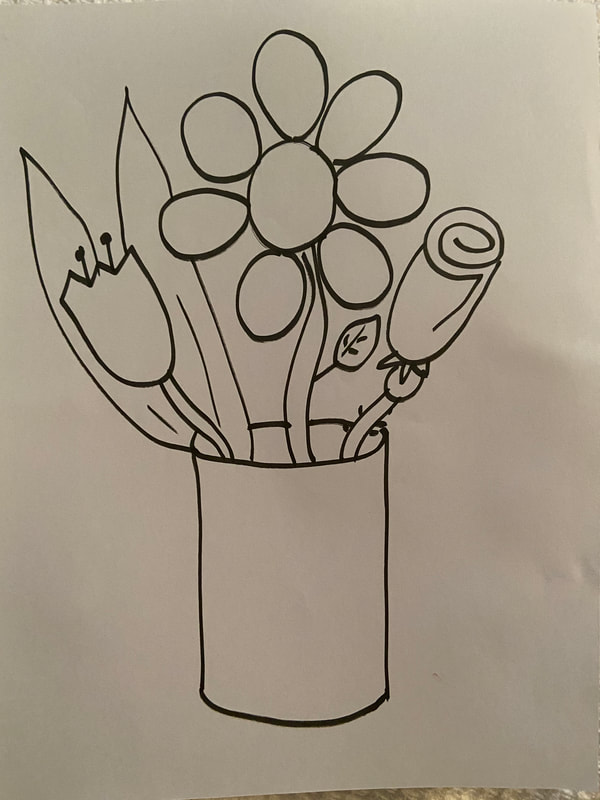
leaves for each flower -all vary - draw back of vase opening
|
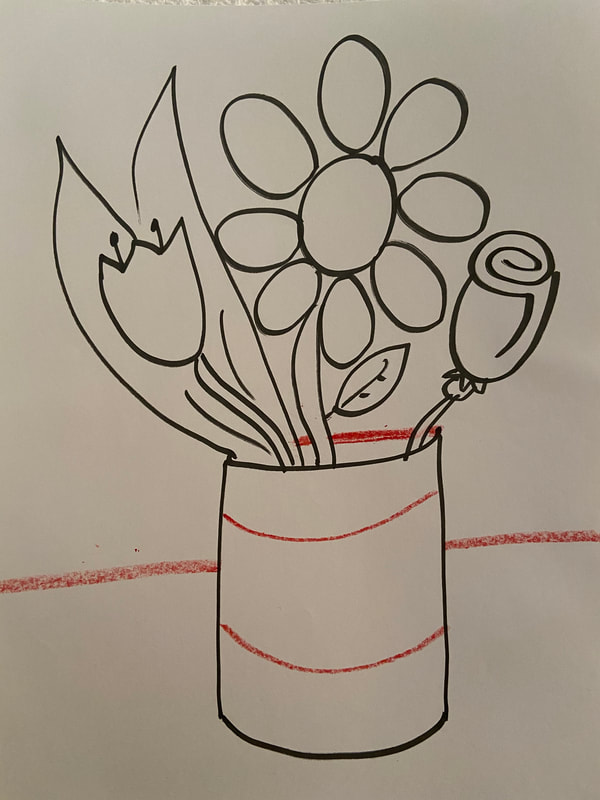
|
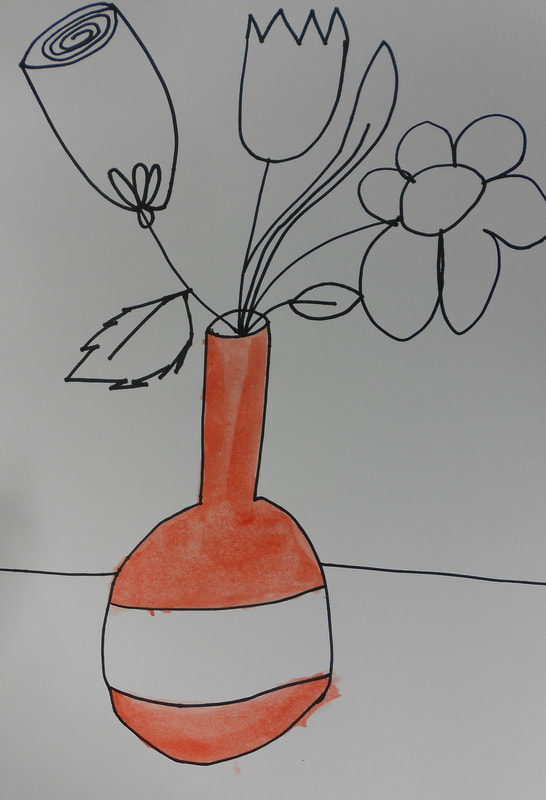
alternative vase shape - start watercolor - student's work
|
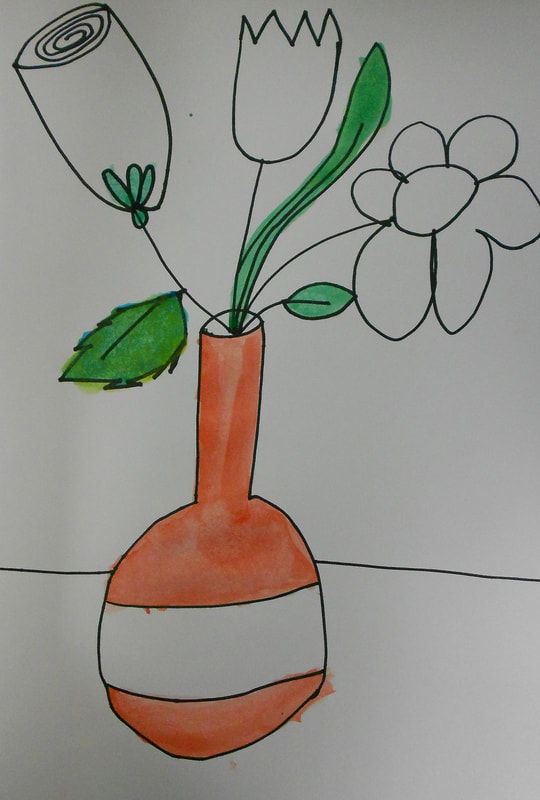
paint leaves
|
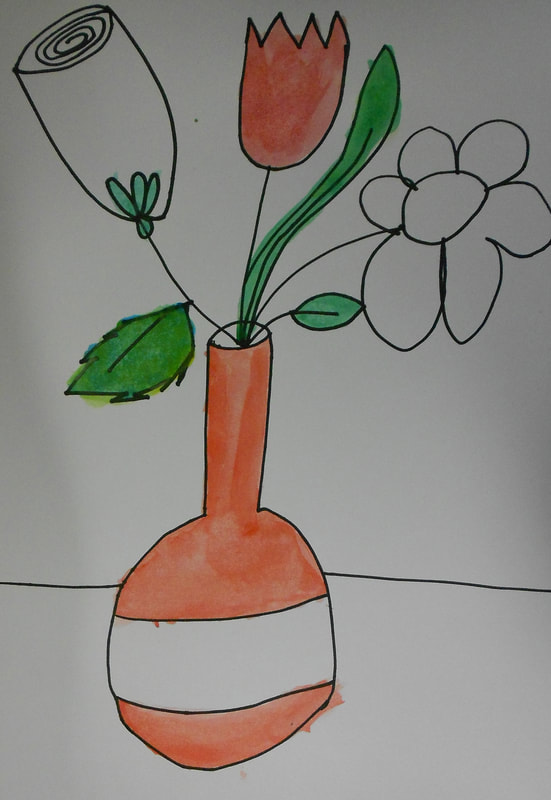
one color at a time - NOTE; wash brush between colors
|
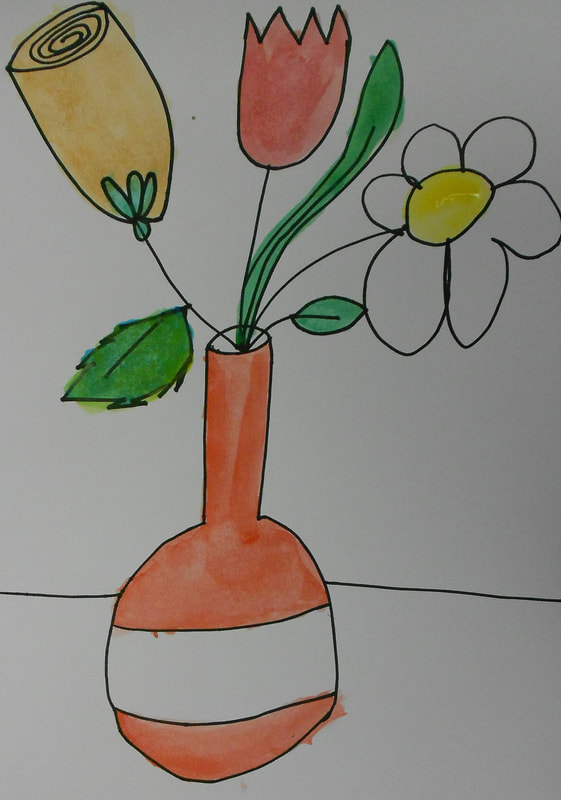
|
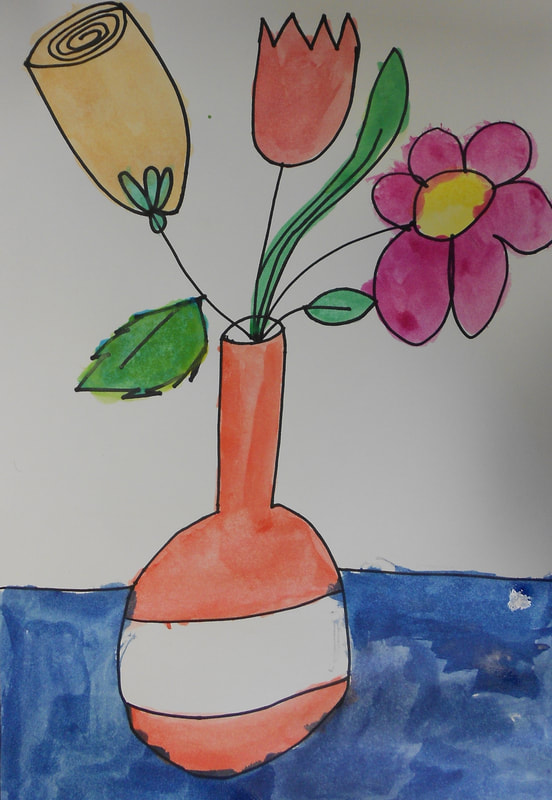
paint table - a color you have NOT used
|
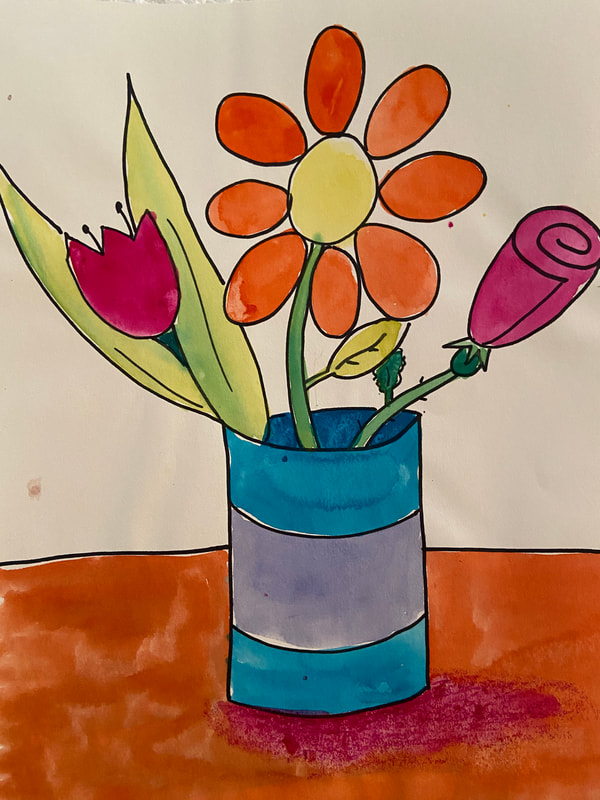
add shadow on table - completed work
|
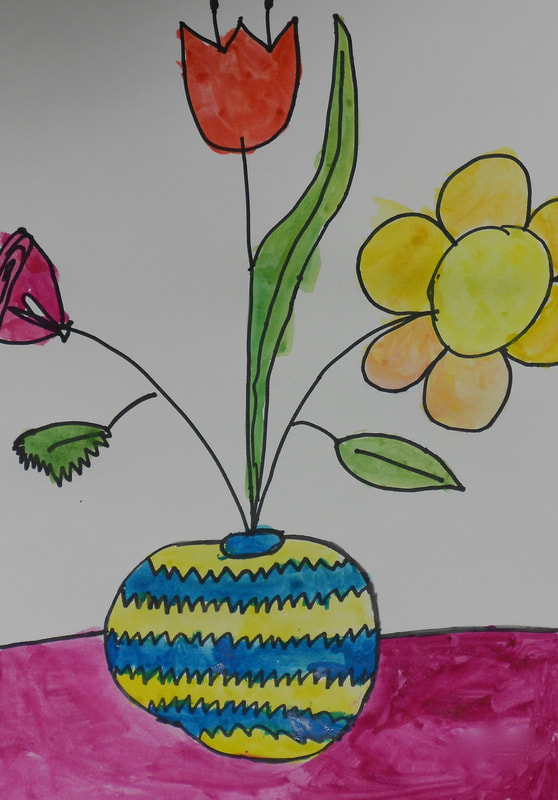
student work
|
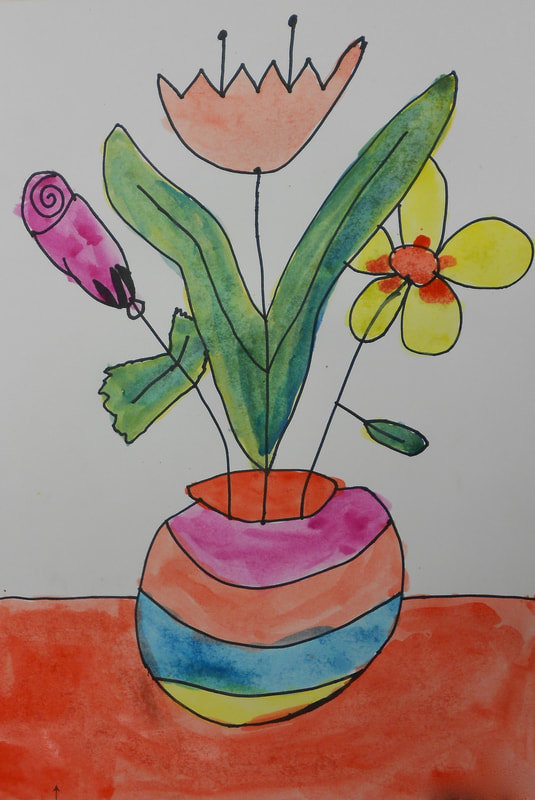
student work
|
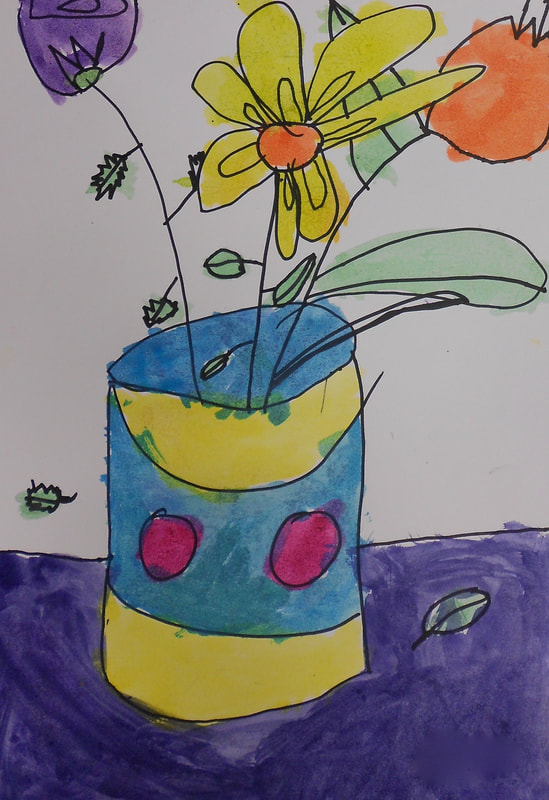
student work
|
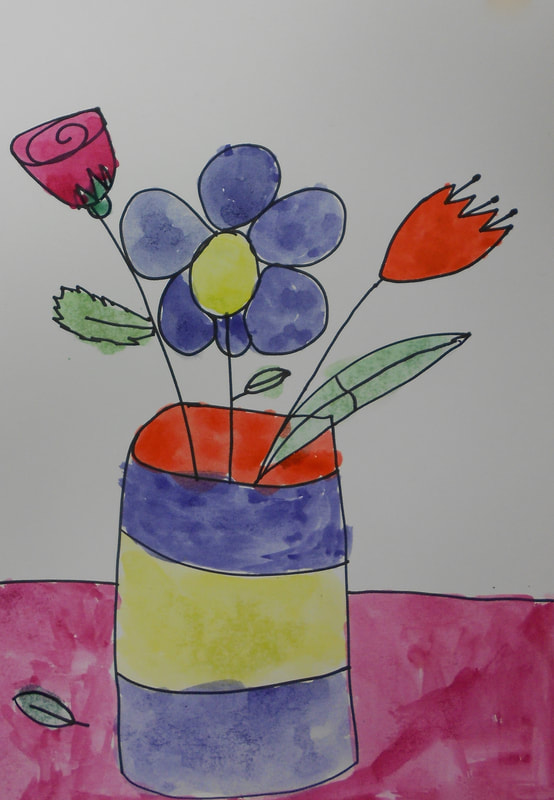
student work
|
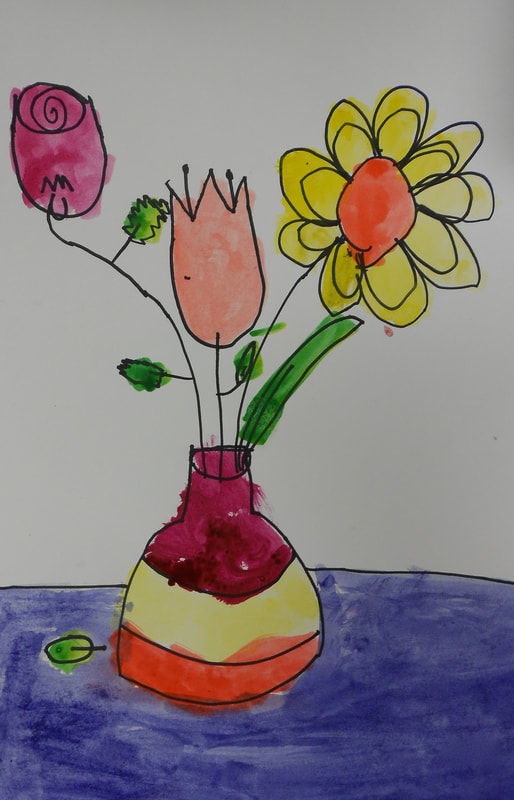
student work
|
objective
Students will learn how to illustrate a simple, floral still life. They will be familiar with shadows + what they do to color + how they transform their art work into more advanced pieces. Students will have examples of floral paintings + examples of Chinese vases for reference.
materials
- pencils
- erasers
- white, watercolor paper (approx. 9"x12"
- watercolor paints
- watercolor brushes
- water containers
- rag pieces or paper towels
- erasers
- white, watercolor paper (approx. 9"x12"
- watercolor paints
- watercolor brushes
- water containers
- rag pieces or paper towels
activity
1. Show students examples of reference pictures.
2. Demonstrate illustrating +painting large enough for all students in class to see details.
4. See example pictures for demonstration of painting steps.
5. Discuss vocabulary words + how they relate to this lesson.
2. Demonstrate illustrating +painting large enough for all students in class to see details.
4. See example pictures for demonstration of painting steps.
5. Discuss vocabulary words + how they relate to this lesson.
vocabulary
- Balance - Visual equilibrium in a composition; achieved by organizing the weight and attention of all elements in an artwork. Types of balance are symmetrical, asymmetrical, radial, and crystallographic.Collage - An artistic composition made of various materials (e.g. paper, cloth, or wood) glued on a surface. Color - The visual sensation dependent on the reflection or absorption of light from a given surface. The three characteristics of color are hue, value. and intensity. Color Harmony; The use of compatible colors to help unify a composition.
- Elements of Art - Sensory components used to create works of art ; line, color, shape, texture, value, space.
- Expressive Content - Ideas that express ideas and moods.
- Harmony - The principle of design that combines elements in a work of art to emphasize similarities of separate but related parts.
- Media - Plural of medium, referring to materials used to make art; categories of art (e.g. painting, sculpture, film).
- Proportion - The size relationships of one part to the whole and of one part to another.
- Realistic - Representing familiar things in a way that is accurate or true to life.
- Scale - The size of an object or image that is measured by its relationship to the other objects and images that are recognized for their normal or actual size.
- Space - An area in which objects or images can exist.
- Shape - A two-dimensional are or plane that may be open or closed, free-form or geometric. It can be found in nature or is made by humans.
- Overlap - When one thing is put over another.
- Primary Colors - Refers to colors red, yellow, and blue. From these all other colors are created.
- Secondary Colors - Colors that are mixtures of two primaries. Red and yellow make orange, yellow and blue make green, and blue and red make violet.
- Unity - Total visual effect in a composition
clean-up
- Allow time, not less than 15-minues, for clean-up
- Assign students jobs to help - no one gets up during this time
- Send students to wash-up
- Discuss project
variation
- use a combination of mediums
- add more flowers
- use larger paper
- use tempera or other paints
- add more flowers
- use larger paper
- use tempera or other paints
ca state visual art standards
1.0 ARTISTIC PERCEPTION
Develop Perceptual Skills and Visual Arts Vocabulary
1.1 Describe and replicate repeated patterns in nature, in the environment, and in works of art.
3.0 HISTORICAL AND CULTURAL
Understanding the Historical Contributions and Cultural Dimensions of the Visual Arts
3.2 Identify and describe various subject matter in art (e.g., landscapes, seascapes, portraits, still life)
2.0 CREATIVE EXPRESSION
Creating, performing, and Participating in the Visual Arts.
Students apply artistic processes and skills, using a variety of media to communicate meaning and intent in original works of art.
Communication and Expression Through Original works of Art
2.4 Plan and use variations in line, shape/form, color, and texture to communicate ideas or feelings in works. of art.
2.7 Use visual and actual texture in original works of art.
4.0 AESTHETIC VALUING
Making Informed Judgements
4.4 Select something they like about their work of art and something they would change.
Develop Perceptual Skills and Visual Arts Vocabulary
1.1 Describe and replicate repeated patterns in nature, in the environment, and in works of art.
3.0 HISTORICAL AND CULTURAL
Understanding the Historical Contributions and Cultural Dimensions of the Visual Arts
3.2 Identify and describe various subject matter in art (e.g., landscapes, seascapes, portraits, still life)
2.0 CREATIVE EXPRESSION
Creating, performing, and Participating in the Visual Arts.
Students apply artistic processes and skills, using a variety of media to communicate meaning and intent in original works of art.
Communication and Expression Through Original works of Art
2.4 Plan and use variations in line, shape/form, color, and texture to communicate ideas or feelings in works. of art.
2.7 Use visual and actual texture in original works of art.
4.0 AESTHETIC VALUING
Making Informed Judgements
4.4 Select something they like about their work of art and something they would change.
national visual arts standards
VISUAL ARTS - RESPONDING
ANCHOR STANDARD 8; Interpret intent and meaning in artistic artwork.
VA:Re8.1.1a
Interpret art by categorizing subject matter and identifying the characteristics of form.
VISUAL ART S - CREATING
ANCHOR STANDARD 2: Organize and develop artistic ideas and work.
Enduring Understanding: Artists and designers experiment with forms, structures, materials, concepts, media, and art-making approaches.
Essential Question(s): How do artists work? How do artists and designers determine whether a particular direction in their work is effective? How do artists and designers learn from trial and error?
VA.Cr2.1.1a
Explore uses of materials and tools to create works of art or design.
ANCHOR STANDARD 8; Interpret intent and meaning in artistic artwork.
VA:Re8.1.1a
Interpret art by categorizing subject matter and identifying the characteristics of form.
VISUAL ART S - CREATING
ANCHOR STANDARD 2: Organize and develop artistic ideas and work.
Enduring Understanding: Artists and designers experiment with forms, structures, materials, concepts, media, and art-making approaches.
Essential Question(s): How do artists work? How do artists and designers determine whether a particular direction in their work is effective? How do artists and designers learn from trial and error?
VA.Cr2.1.1a
Explore uses of materials and tools to create works of art or design.