how to print for kids
native American symbols - printing
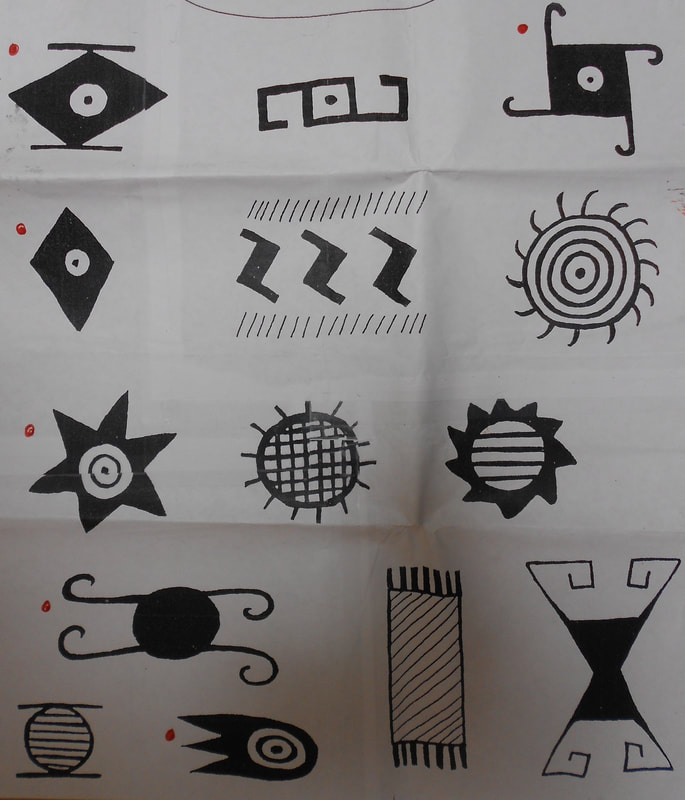
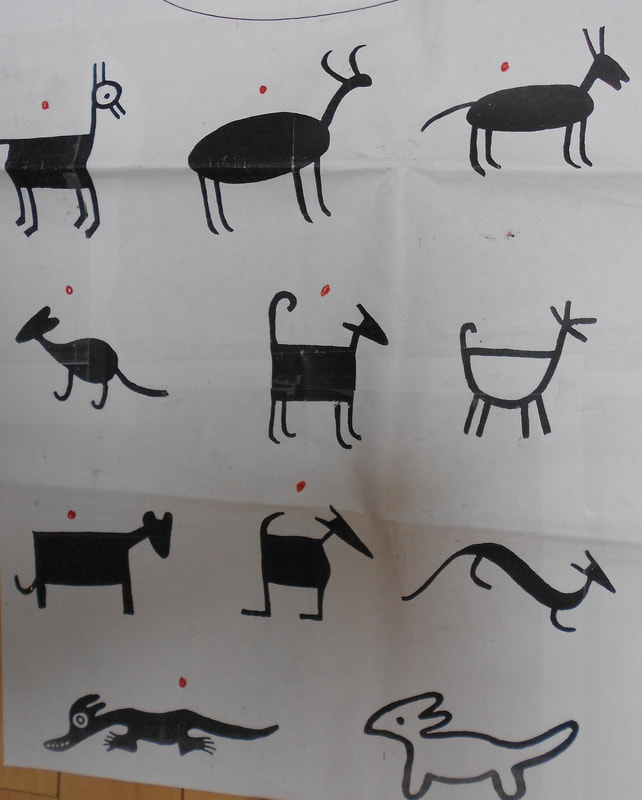
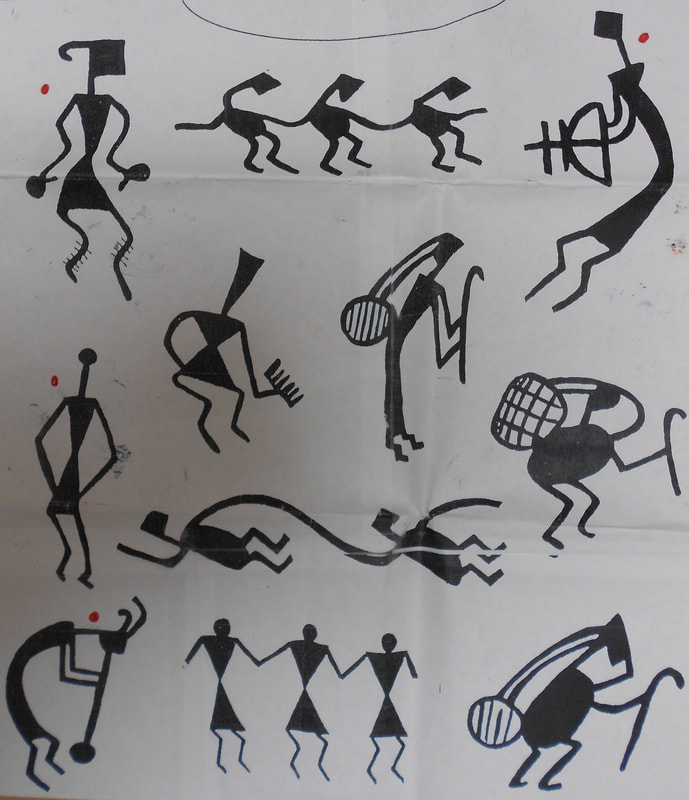
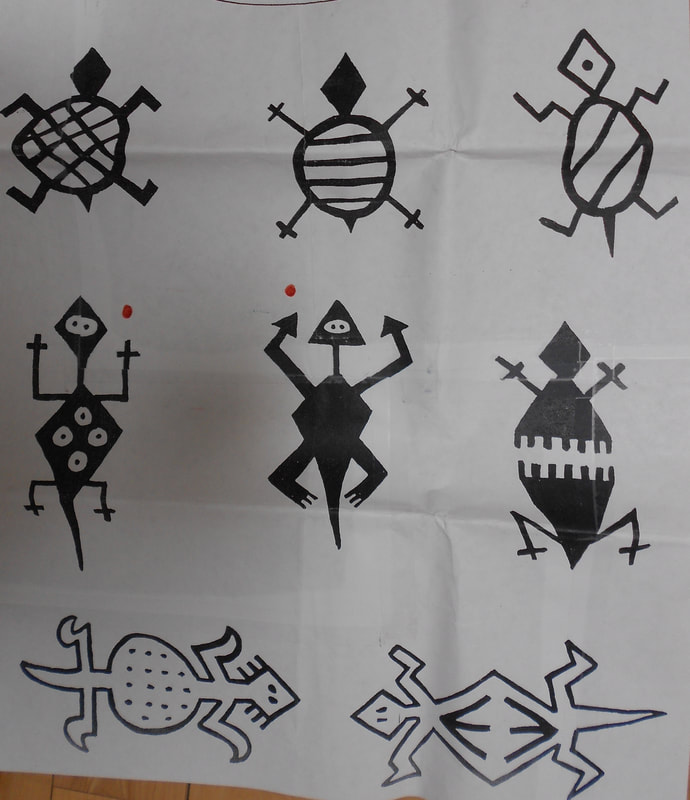
Students learn about Native American rock art symbols while learning the basics of one-time prints.
image examples
|
|
|
|
-show students basic, geometric Native American symbols
- note symbols which have thick areas of color as they will print stronger - some examples are shown here - red dot denoted the best images - students should make all lines very thick on their printing plates |
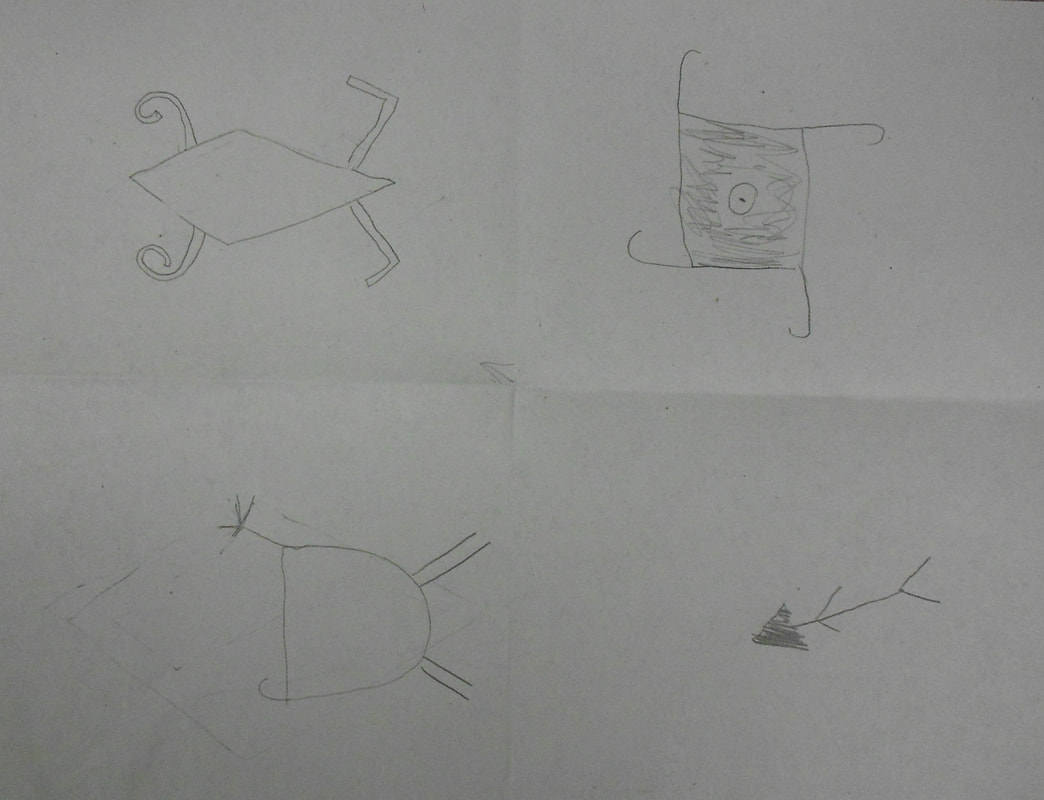
1. students create practice images to print - images with thick black lines +/or areas work the best
|
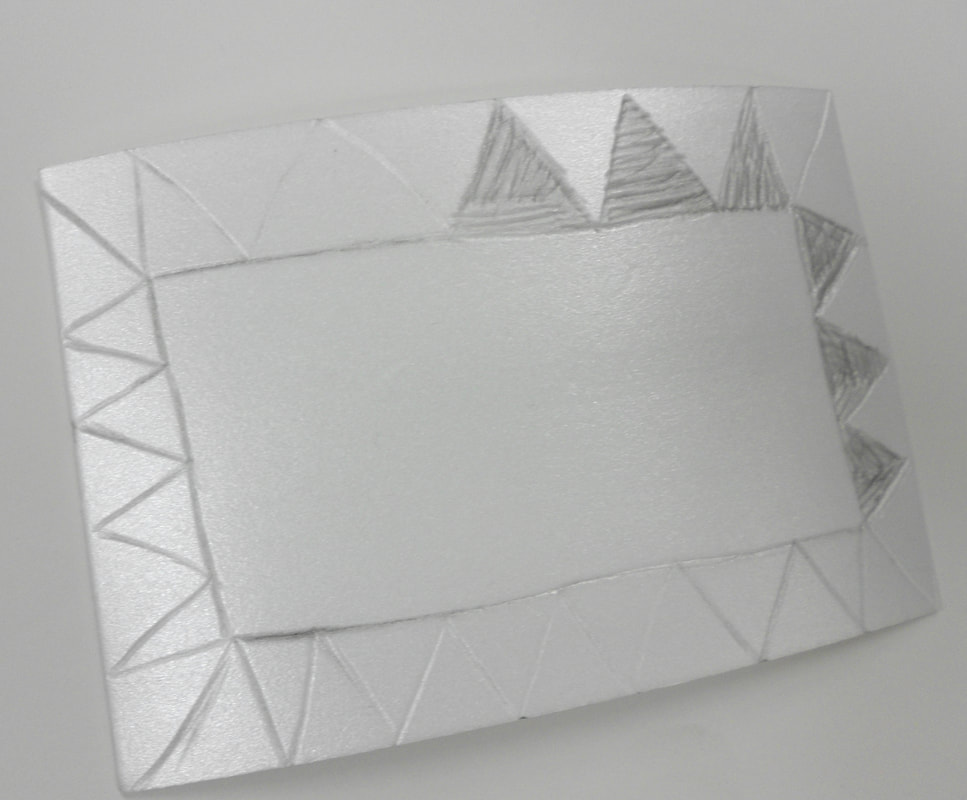
2. create a border - colored in areas should be solid - when filling in areas start by pressing lightly/gently with pencil or dowel tool
|
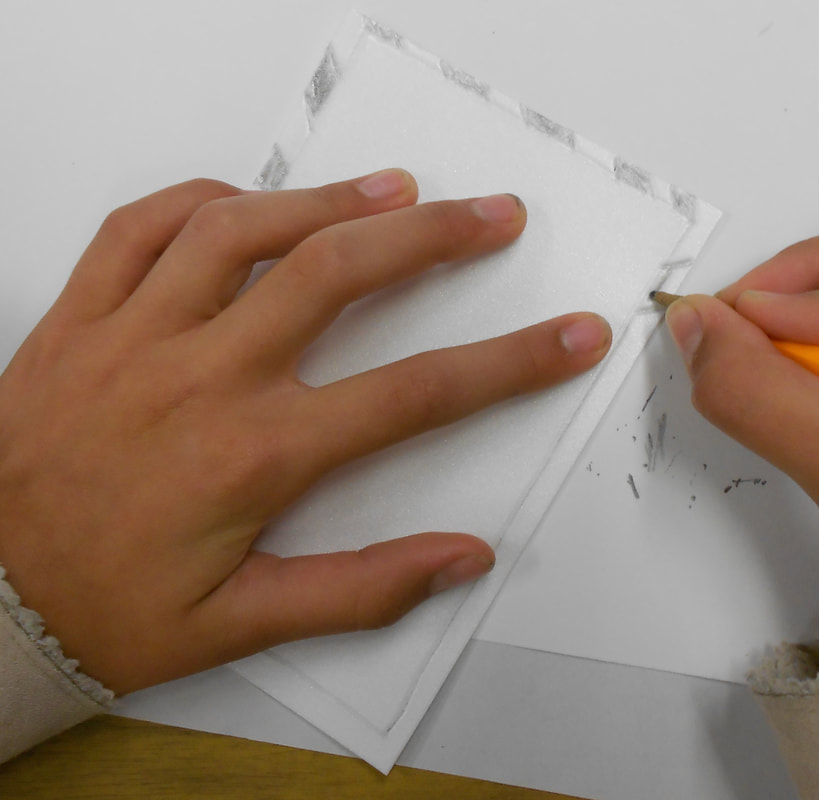
3. border thickness may vary - notice pencil work
|
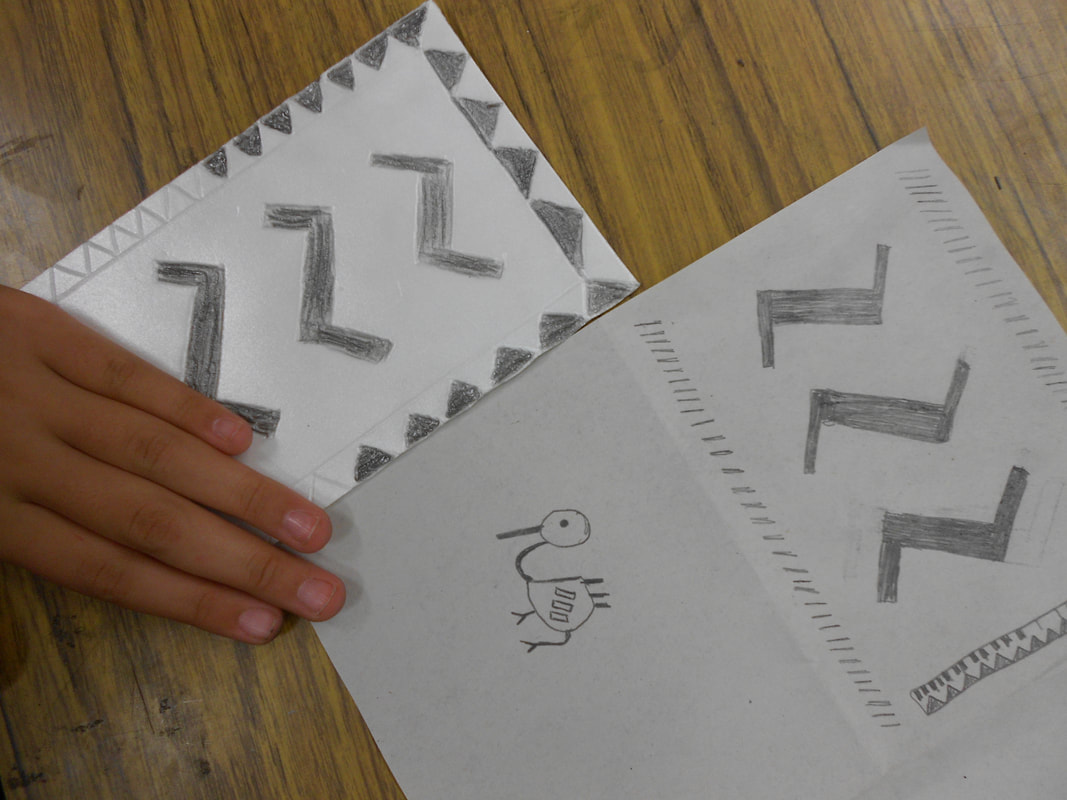
4. even the simplest/boldest images work well
|
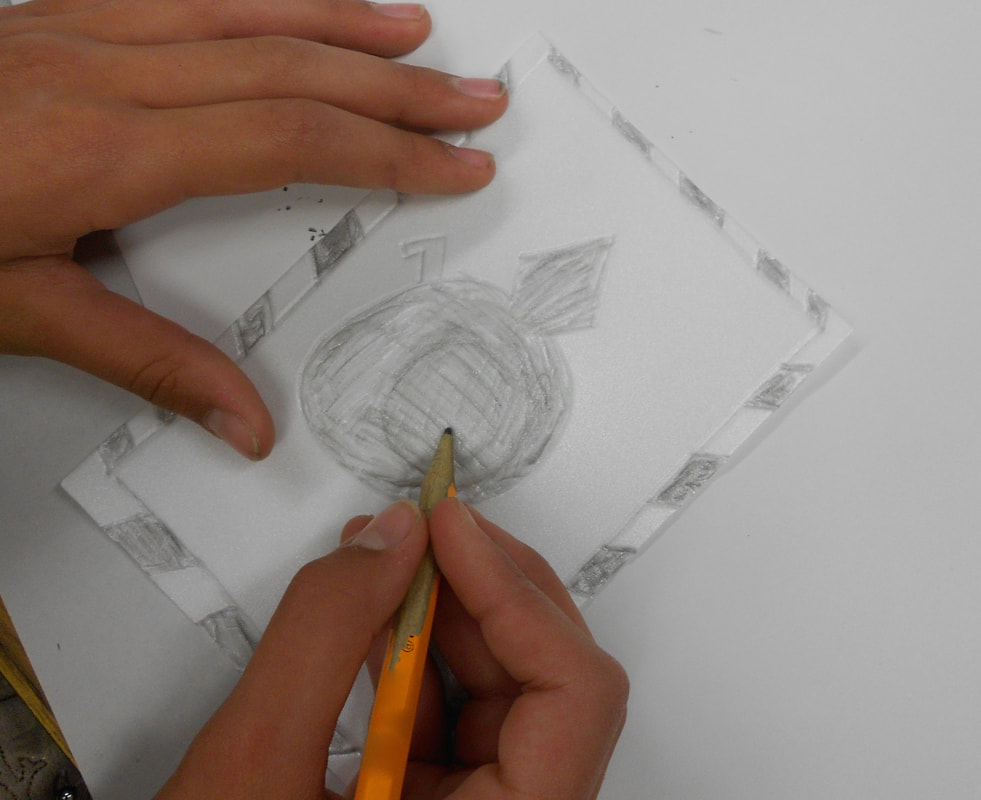
5. for large filled in areas, draw in multiple directions to fill shape in - patience - start by pressing gently with tool/pencil
|
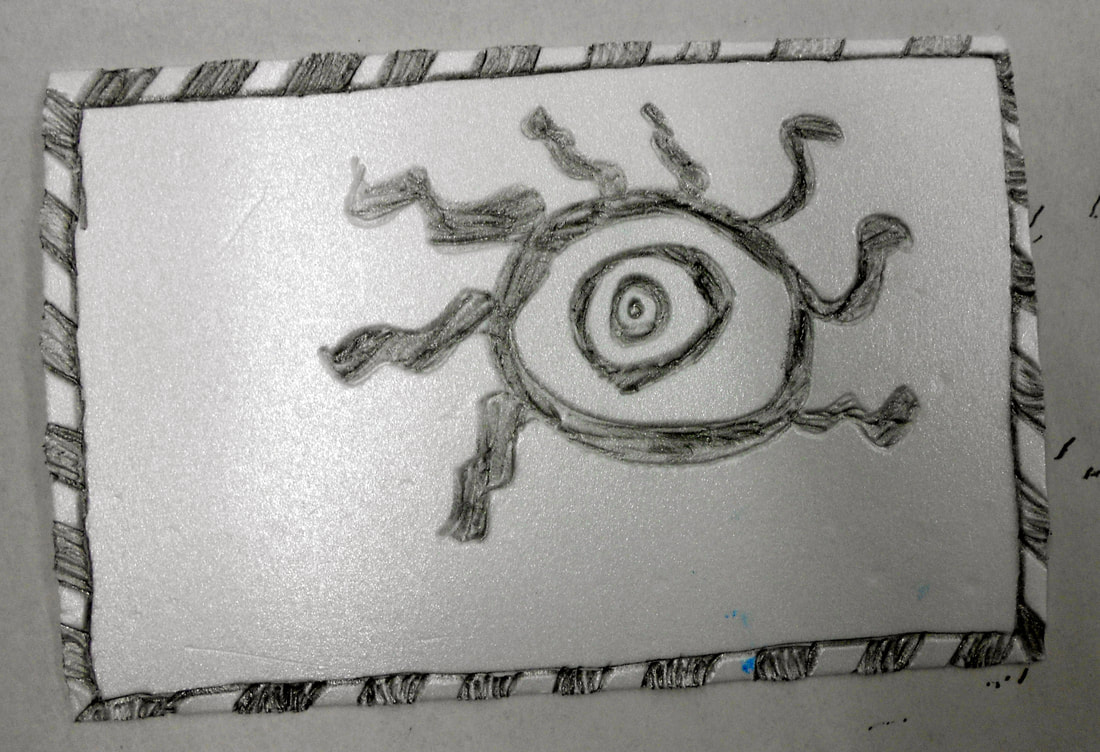
6. finished image on styrofoam - ready to ink
|
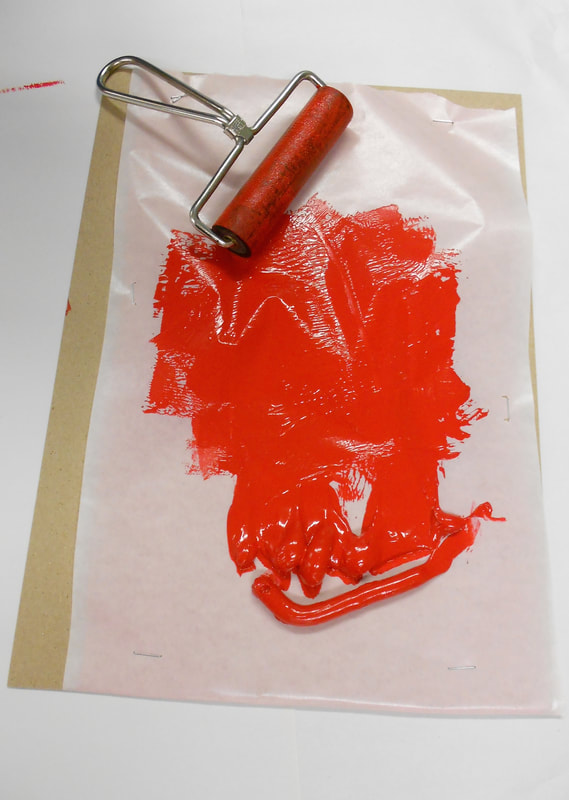
7. roll out thin, even layer of ink
|
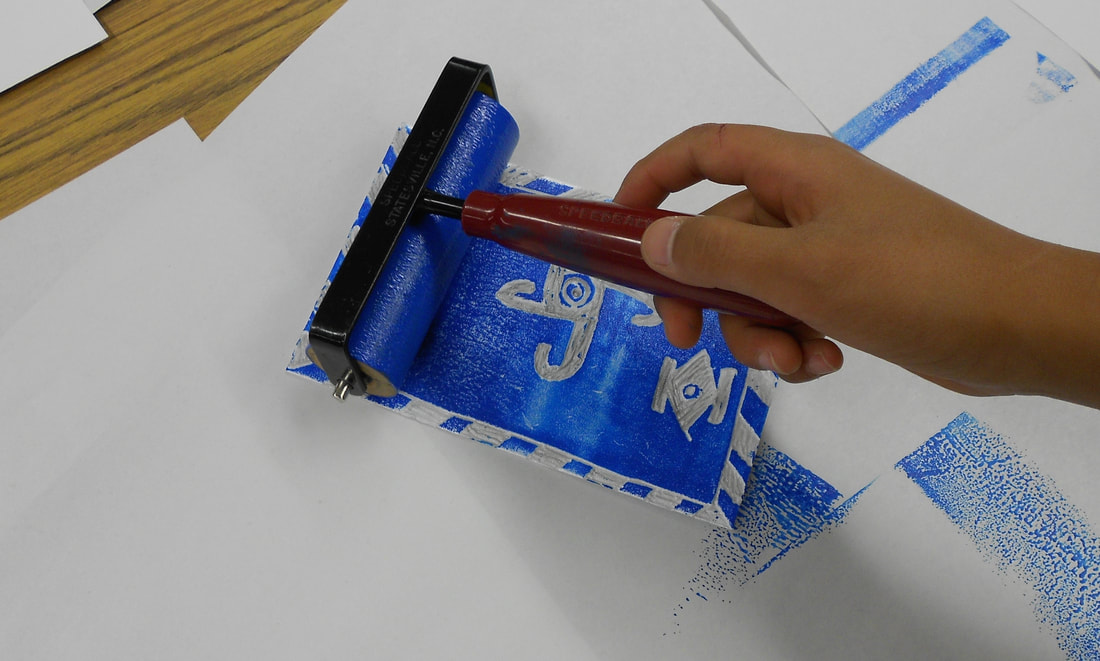
8. roll ink on styrofoam - evenly covering entire board - ink should only be on flat, untouched or drawn or surfaces
|
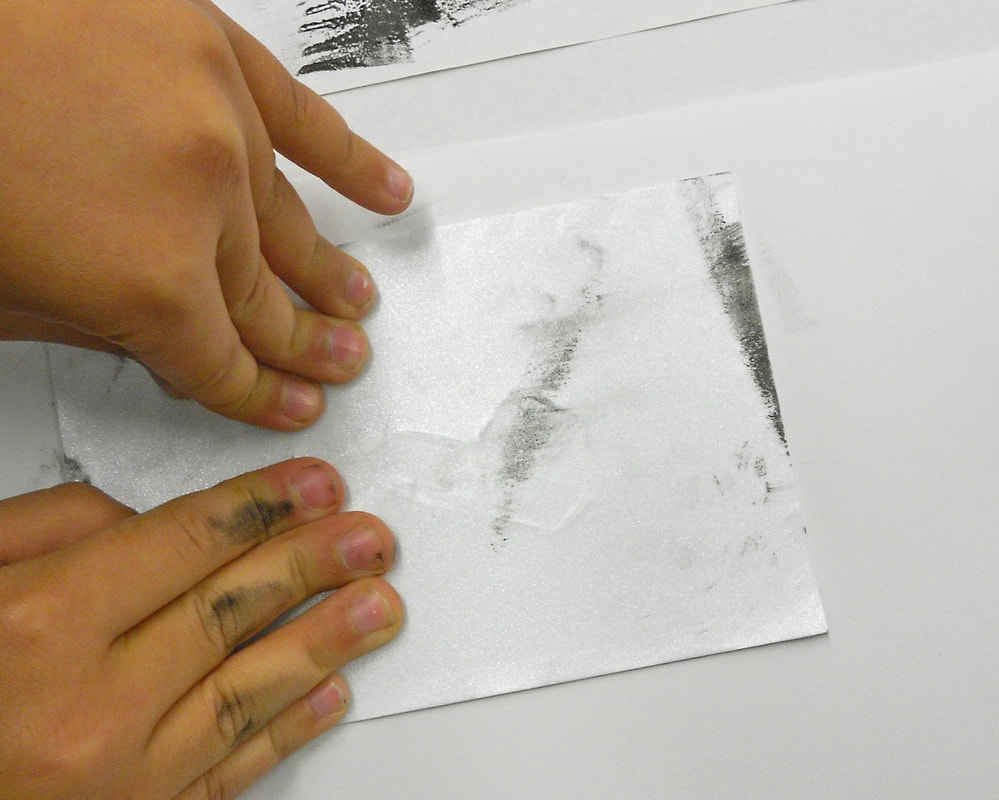
9. press styrofoam board on paper - do not lift until completely rubbed all over, including edges
|
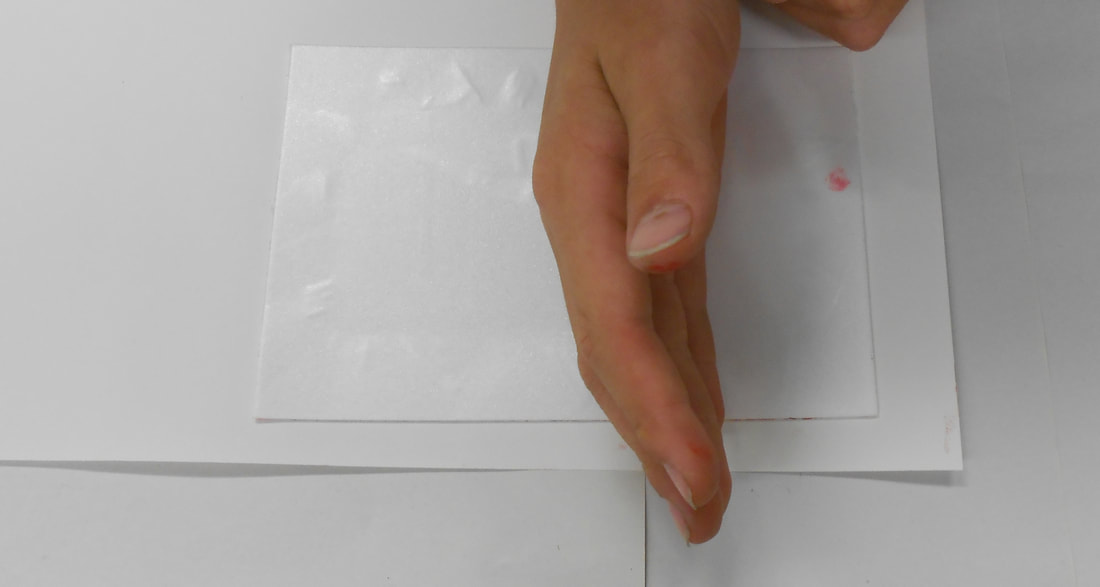
10. use multiple style of pressing the inked board on paper to ensure an even cover
|
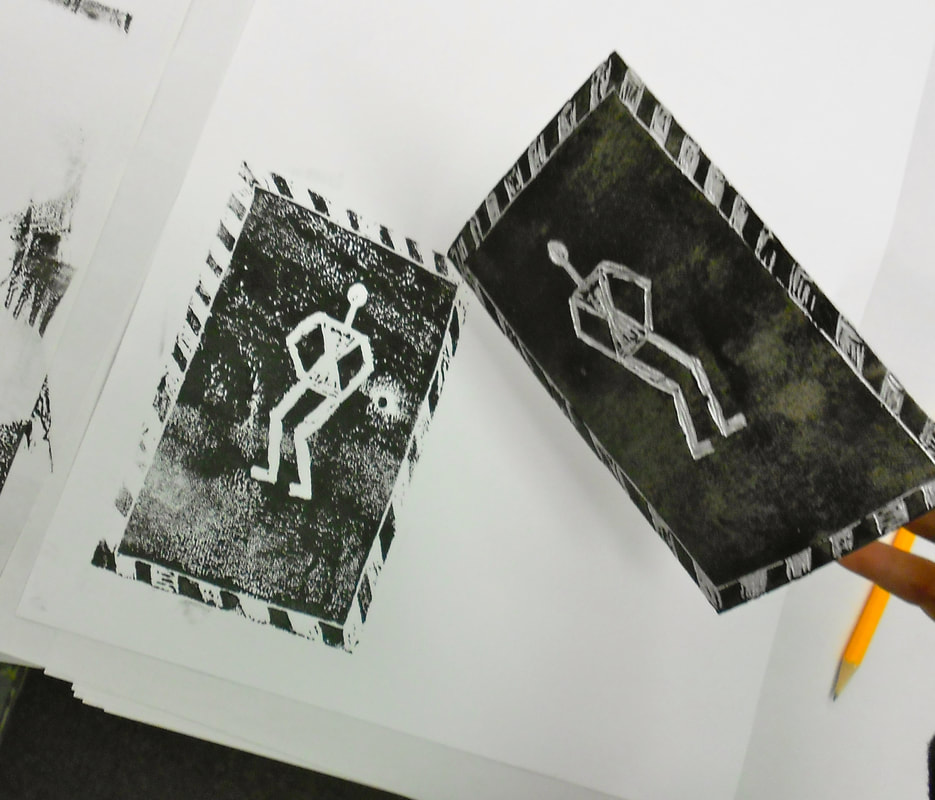
11. carefully lift styrofoam.
|
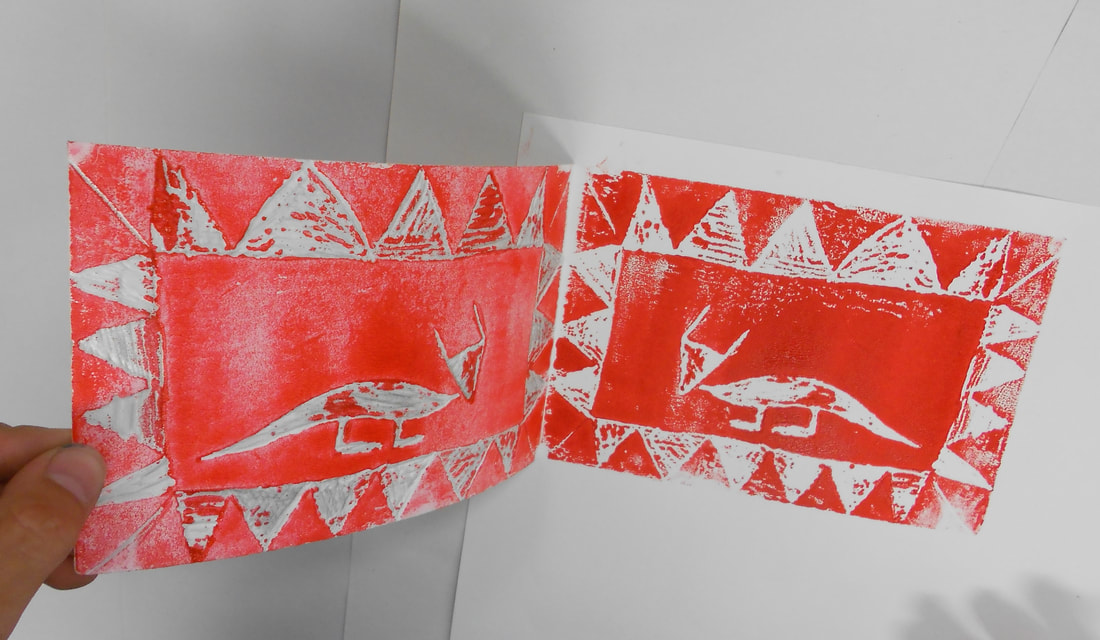
12. if ink is not evenly covering styrofoam, the print will not be evenly a solid color
|
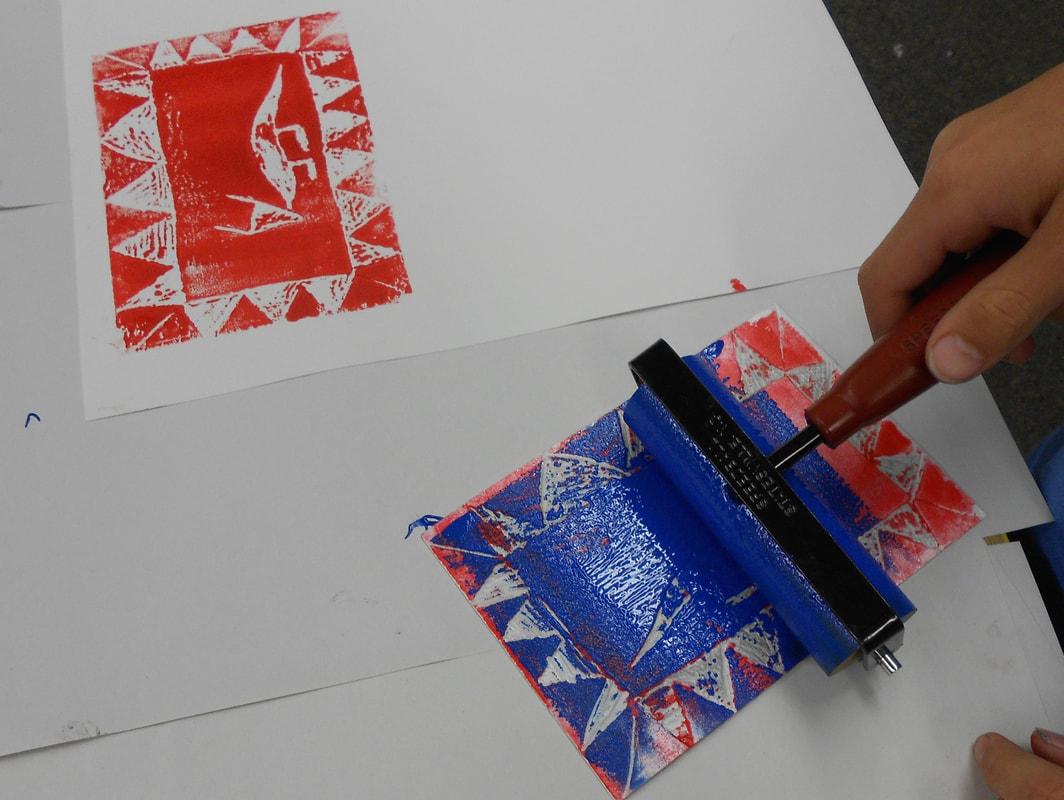
13. have students experiment using a 2nd color over the first - if the styrofoam is cleaned prior to 2nd color - make sure it it fully dried
|
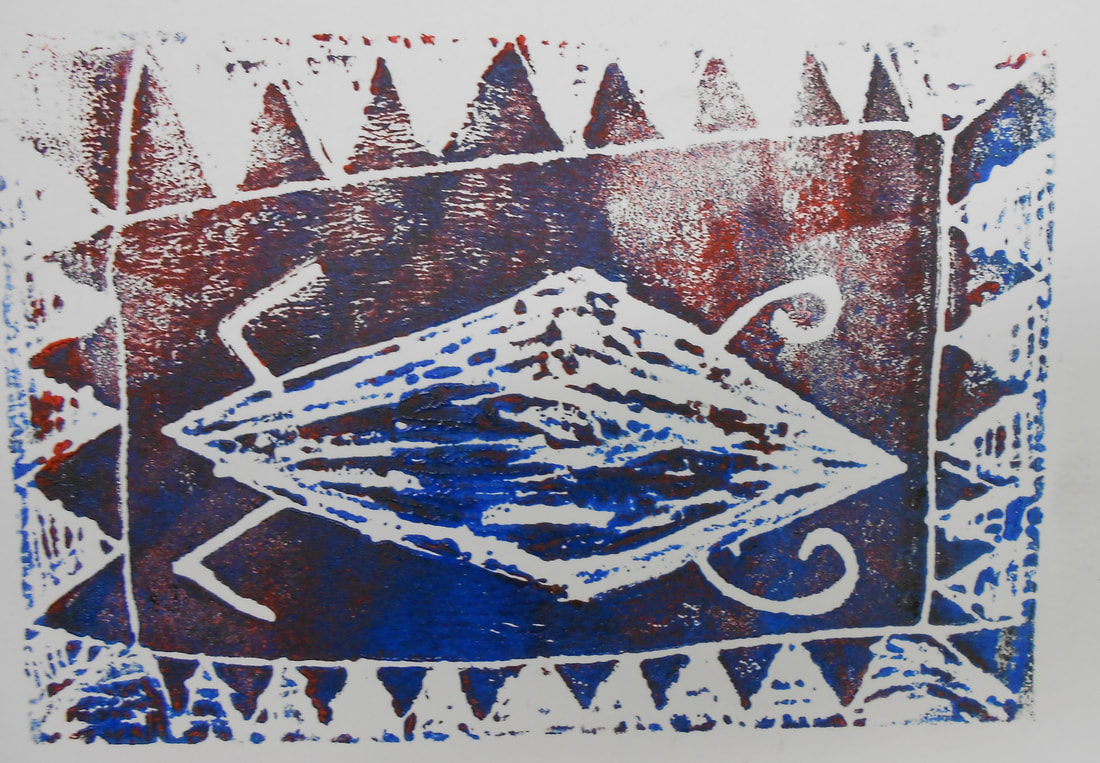
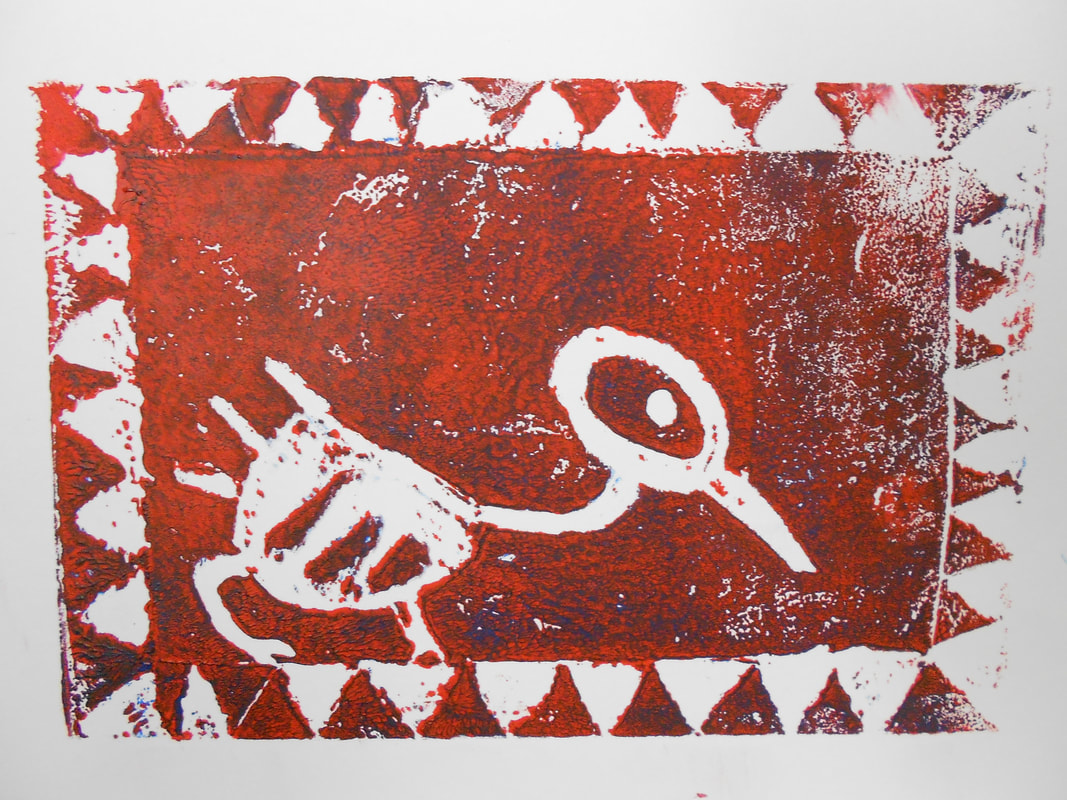
14. example - 2 colors on uncleaned styrofoam - red was Not cleaned off prior to blue application
|
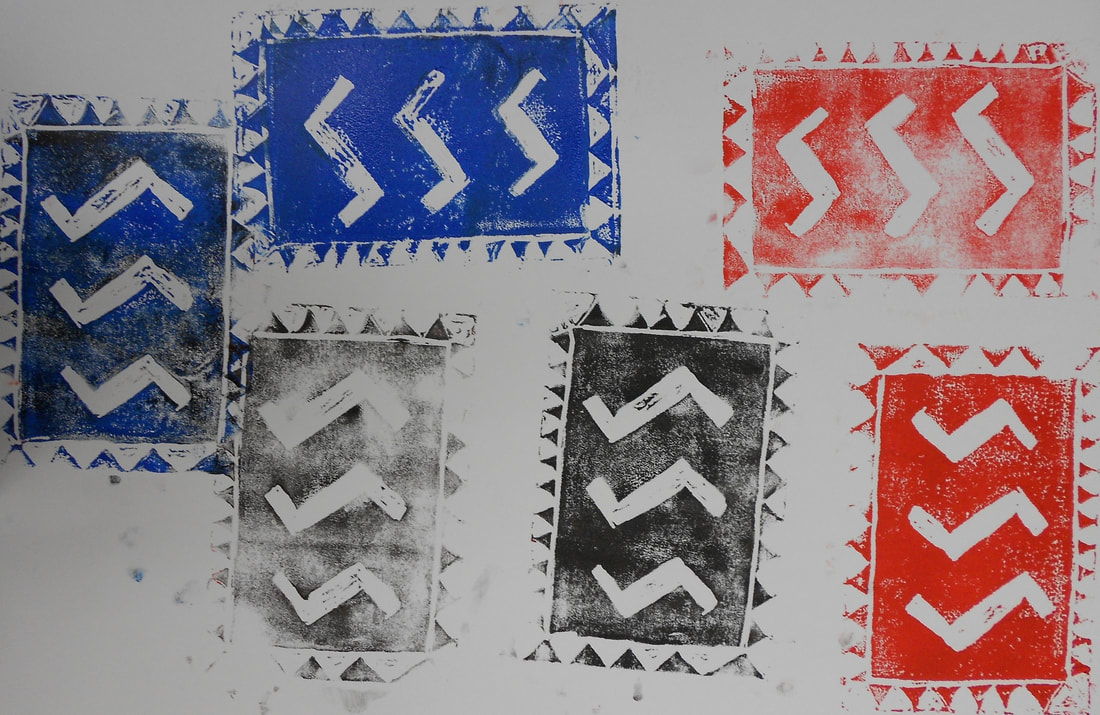
15. white paper should be larger than styrofoam ink plates - multiple prints - plates cleaned + dried prior to each color application
|
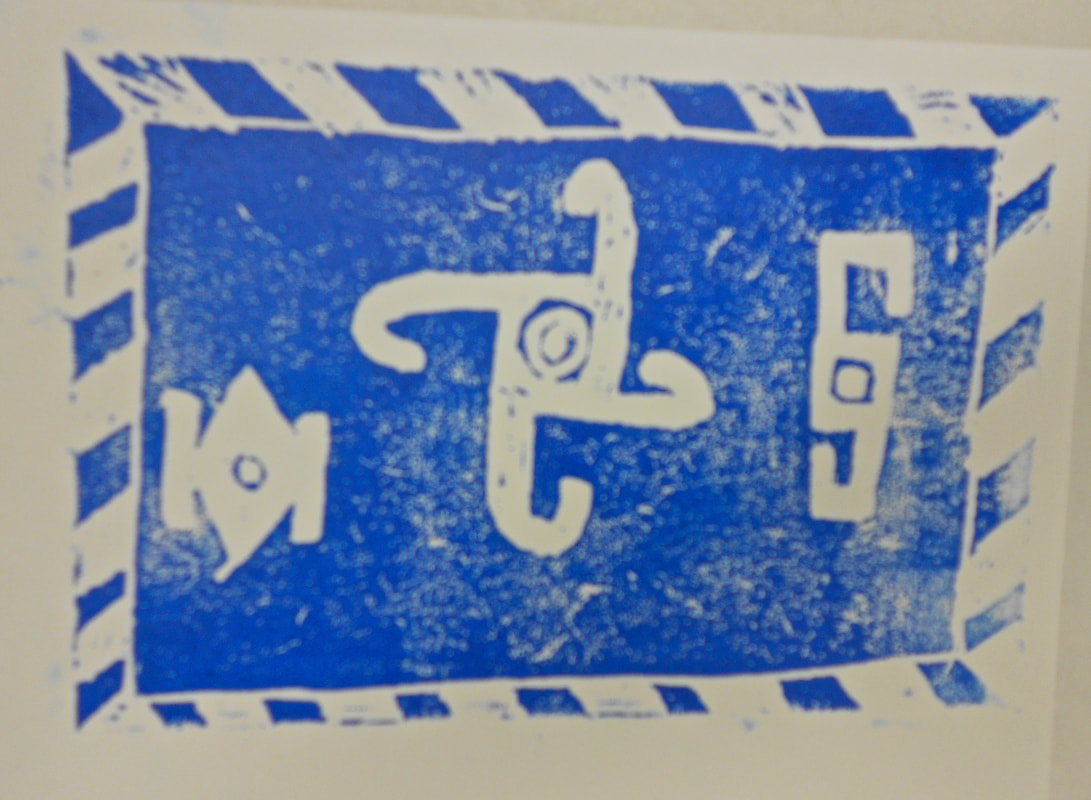
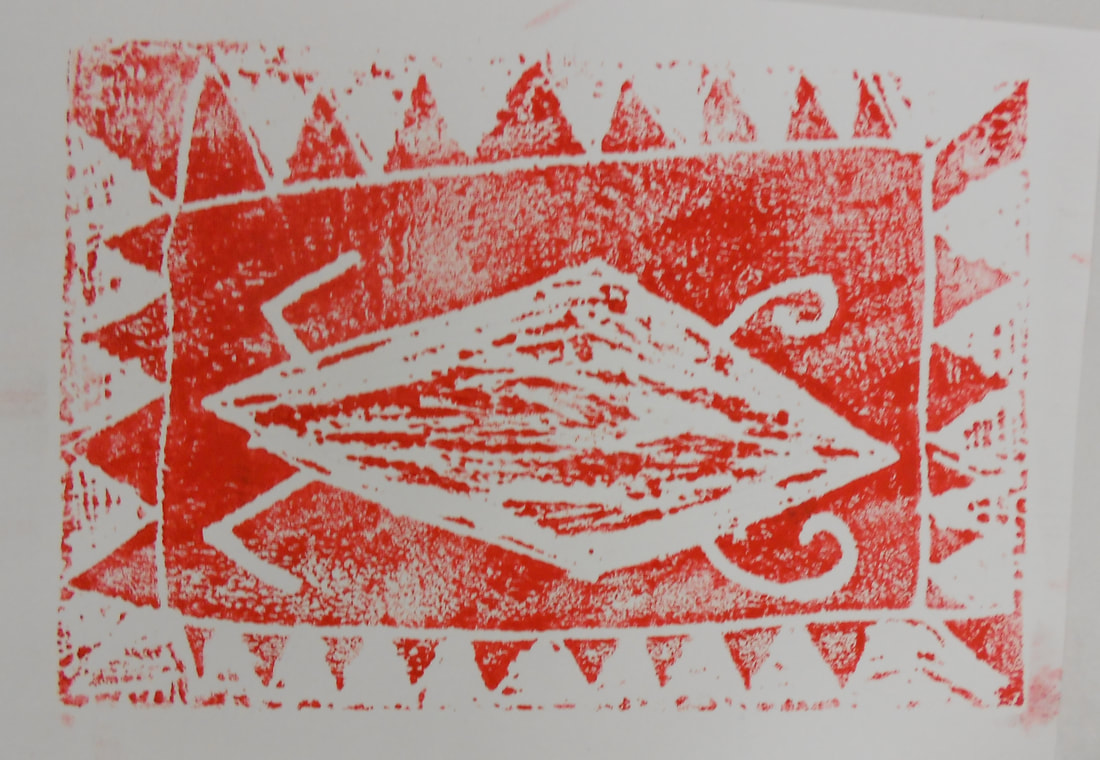
16. printed example
|
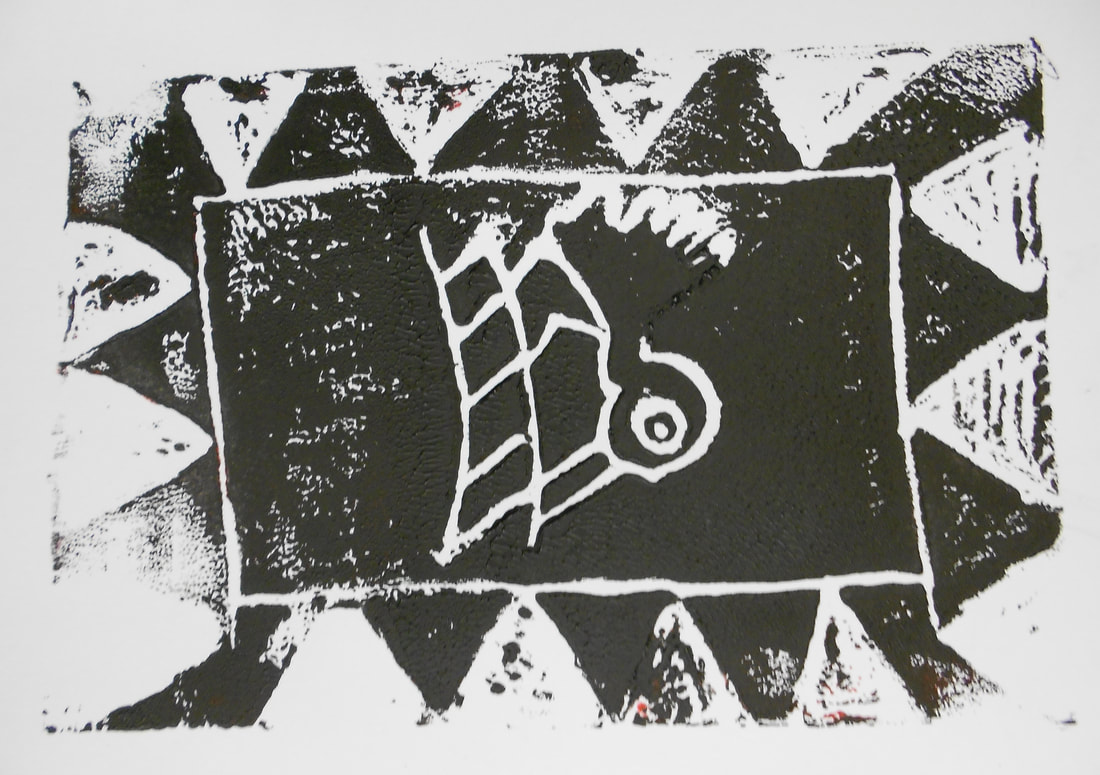
17. printed example
|
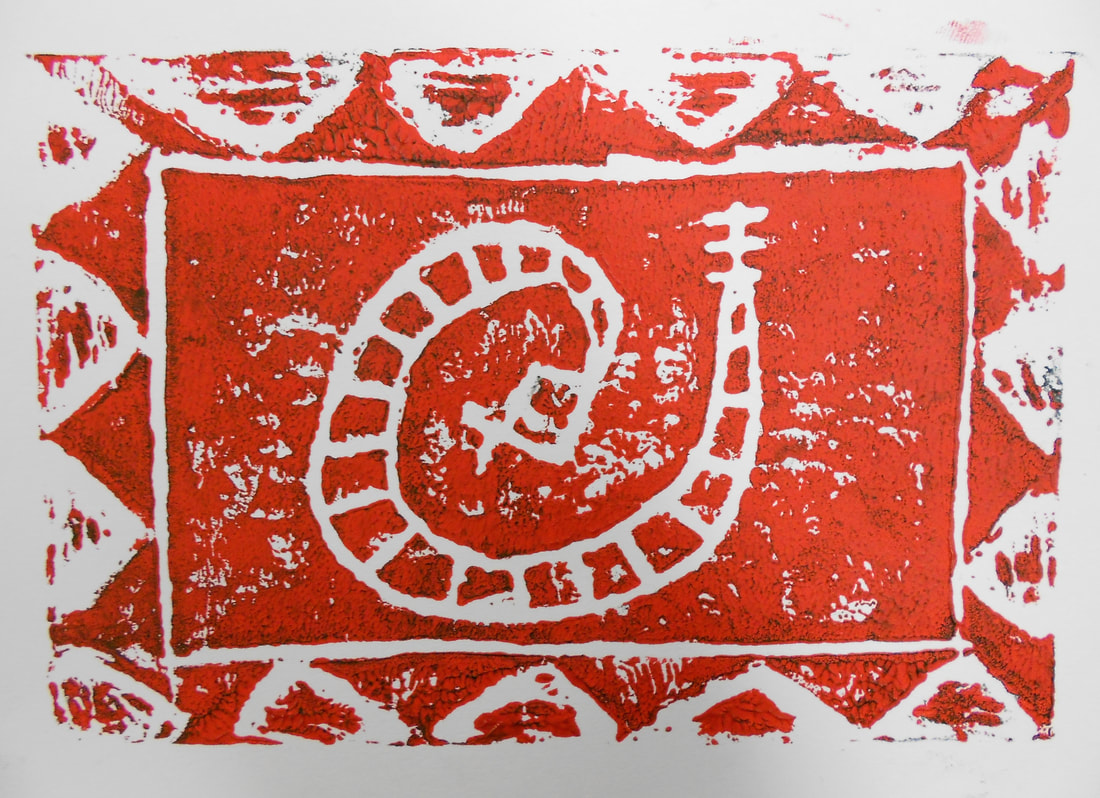
18. printed example
|
19. printed examples
|
20. 2nd color over uncleaned styrofoam
|

21. printed example
|
objective
Students will learn + be familiar with a variety of Native American symbols. They will know the basics of a single time print method. Each student will complete a successful print. They will also learn thru experimentation what happens with multiple colors on a single print.
materials
- white paper (larger than styrofoam sheets being used
- ball point pencils or small, dull dowels
- Native American symbols for reference
- thin, styrofoam sheets (can be ordered from art supply catalogs) or clean, styrofoam trays (straight, flat area only)
- printing ink
- brayers
- boards for ink - covered in a non-absorbing material or plastic
- area for drying, printing
- ball point pencils or small, dull dowels
- Native American symbols for reference
- thin, styrofoam sheets (can be ordered from art supply catalogs) or clean, styrofoam trays (straight, flat area only)
- printing ink
- brayers
- boards for ink - covered in a non-absorbing material or plastic
- area for drying, printing
clean-up
- Printing ink stains so clean-up should be organized + well instructed.
- Have a designated area for finished work. Be sure to spread paper or drop cloths down 1st.
- Give washing/rinsing of brayers to 1 or 2 designated students.
- Have large trash bags ready or large trash bins.
activity
1. NOTE: printing ink stains
2. See photos above for steps.
3. Show examples of images.
4. Have students make a sample, to size.
5. IMPORTATNT: Start gently pressing on foam-board.
6. Large areas change directions of pressing with tool.
7. When ready for ink, board should be 50% colore/pressed + 50% raised.
8. Ink should be thinly + evenly on roller prior to rolling ink on foam-board.
9. Roll an even, thin layer of ink on board, then turn over onto paper.
10. Carefully press down the ENTIRE foam-board onto paper. Have stunts press boards multiple times to assure that
ALL areas have been pressed.
11. Carefully raise off board from paper starting at one corner or end.
12. If paper is large, more that one print can be made on one sheet of paper.
13. NOTE: Not all prints will be perfect.
2. See photos above for steps.
3. Show examples of images.
4. Have students make a sample, to size.
5. IMPORTATNT: Start gently pressing on foam-board.
6. Large areas change directions of pressing with tool.
7. When ready for ink, board should be 50% colore/pressed + 50% raised.
8. Ink should be thinly + evenly on roller prior to rolling ink on foam-board.
9. Roll an even, thin layer of ink on board, then turn over onto paper.
10. Carefully press down the ENTIRE foam-board onto paper. Have stunts press boards multiple times to assure that
ALL areas have been pressed.
11. Carefully raise off board from paper starting at one corner or end.
12. If paper is large, more that one print can be made on one sheet of paper.
13. NOTE: Not all prints will be perfect.
vocabulary words
- Balance - Visual equilibrium in a composition; achieved by organizing the weight and attention of all elements in an artwork. Types of balance are symmetrical, asymmetrical, radial, and crystallographic.
- Contour drawings - The drawing of an object as though the drawing tool is moving along the edges and ridges of the form.
- Form - A three-dimensional volume or the illusion of three dimensions (related to shape, which is twi-dimensional); the particular characteristics of the visual elements of a work of art (as distinguished from its subject matter or content).
- Harmony - The principle of design that combines elements in a work of art to emphasize similarities of separate but related parts.
- Negative - Refers to shapes or spaces that are or represent areas unoccupied by objects.
- Positive - Shapes or spaces that are or represent solid objects.
- Proportion - The size relationships of one part to the whole and of one part to another.
- Scale - The size of an object or image that is measured by its relationship to the other objects and images that are recognized for their normal or actual size.
- Space - An area in which objects or images can exist.
- Shape - A two-dimensional are or plane that may be open or closed, free-form or geometric. It can be found in nature or is made by humans.
- Unity - Total visual effect in a composition achieved by the careful blending
variation
- Print on a variety of surfaces, fabric, cardboard, other size/types of paper.
- Pre-mix colors for a larger range of choices.
- Print a drawing.
CA state visual art standards
1.0 AESTHETIC PERCEPTION
Develop Visual Arts Vocabulary
1.2 Describe how negative shapes/forms and positive shapes/forms are used in a chosen work of art.
2.0 CREATIVE EXPRESSTION
Communication an Expression through Original Works of Art
2.6 Interaction between positive and negative space expressively in a work of art.
3.0 HISTORICAL AND CULTURAL CONTENT
Diversity of the Visual Arts
3.2 Identfy and describe the content of works of art in the past and present, focusing on the different culture that have contributed to California's history and art heritage..
Make Informed Judgements
4.4 Identify and describe how various cultures define and value art differently.
Develop Visual Arts Vocabulary
1.2 Describe how negative shapes/forms and positive shapes/forms are used in a chosen work of art.
2.0 CREATIVE EXPRESSTION
Communication an Expression through Original Works of Art
2.6 Interaction between positive and negative space expressively in a work of art.
3.0 HISTORICAL AND CULTURAL CONTENT
Diversity of the Visual Arts
3.2 Identfy and describe the content of works of art in the past and present, focusing on the different culture that have contributed to California's history and art heritage..
Make Informed Judgements
4.4 Identify and describe how various cultures define and value art differently.