how to soap carve for kids
The following is a 3rd grade art lesson on the Inuit people + soap carving a Polar Bear similar to Inuit carvings. The lesson uses Inuit Native American Polar Bear sandstone carving, and bear sculptures from a Los Angeles artist for inspiration.
Scroll down to find:
Scroll down to find:
- examples of Inuit carving images
- step-by-step instructions with pictures of the project
- a lesson plan (including California State Visual Art Standards)
inuit Bear Carving
- Inuit is plural - Inuk is singular
- the inhabit the Arctic regions of Greenland, Canada, + Alaska
- Inuit people are nomadic , so tools, amulets, personal decorations were small for easy transport
- sculptures were made of sandstone, bone, antler, + animal hides
- some Inuit believe that the spirits of their ancestors could be in seen dancing in the Aurora Borealis (Northern Lights)
- Inuits pass legends + beliefs from generation to generation
- the Polar Bear is the subject most represented in Inuit art + legend
- the laws of Inuit people are not written on paper
- small bear carvings were brought on hunts for respect of the power of this animal + to offer protection
stone sculptures by California Laura McCormac
Laura McCormac has long been involved in many very physical arts, among them are Tai Chi, Aikido, cello playing, singing in choirs, gardening, dancing, with dogs, + Feldenkrais Awareness Through Movement. She brings to stone her love of spiritual, natural, beautiful flow.
Studying at Santa Monica College with Don Hartman, she exhibited in 2 group shows at the Barrett Gallery behind the Broad Stage on Santa Monica Blvd. at 11th Street in Santa Monica. She shows regularly at the Beverly Hills Art Show, Calabasas Art Show, + The Skirball Cultural Center.
She is a member of the Pasadena Society of Artists + the Pacific Palisades Art Association.
Info taken from her website sculpturebylaura.com
Studying at Santa Monica College with Don Hartman, she exhibited in 2 group shows at the Barrett Gallery behind the Broad Stage on Santa Monica Blvd. at 11th Street in Santa Monica. She shows regularly at the Beverly Hills Art Show, Calabasas Art Show, + The Skirball Cultural Center.
She is a member of the Pasadena Society of Artists + the Pacific Palisades Art Association.
Info taken from her website sculpturebylaura.com
Have students notice the details on Laura McComac's sculptures. The smooth finish. The details of the face, neck, + feet should also be pointed out to them. The artist makes a hard surface look soft.
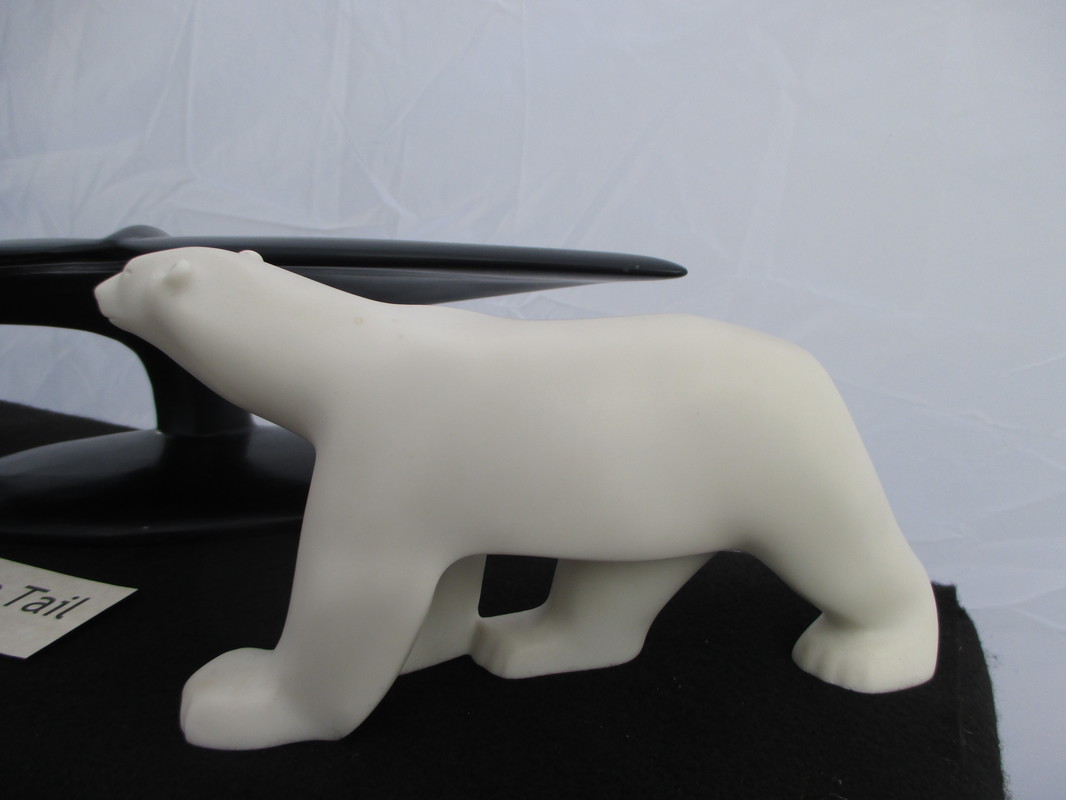
side view - notice the smooth finish - note curved back
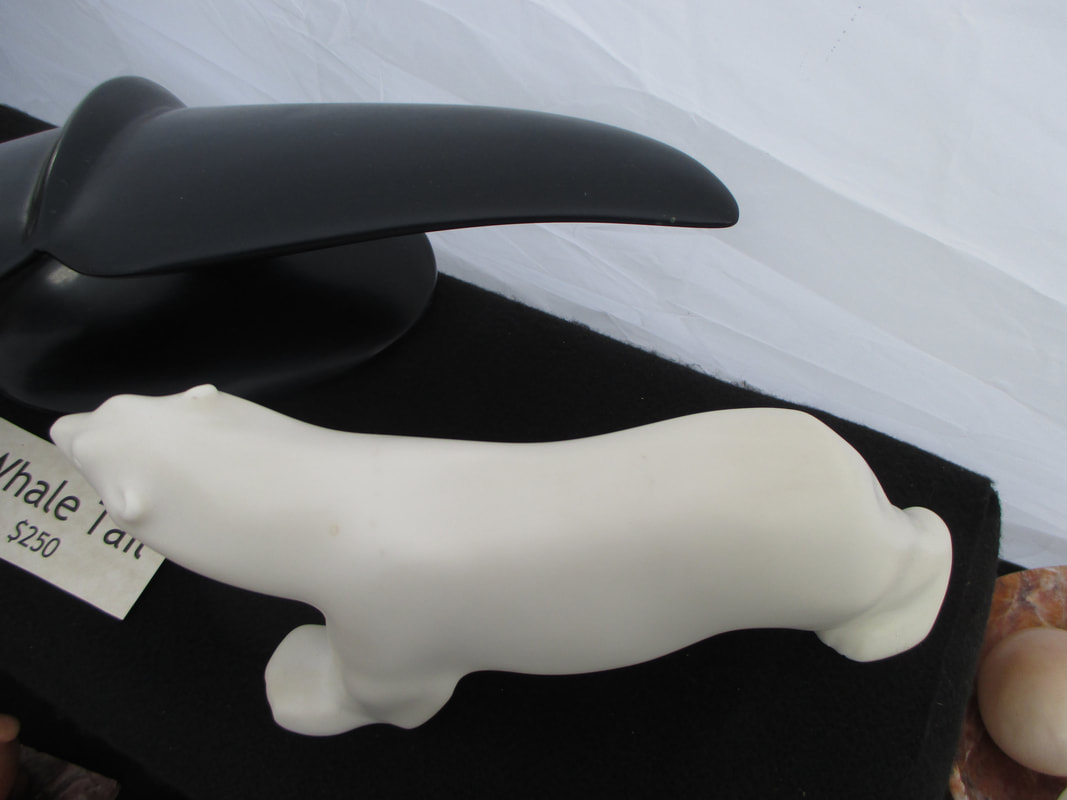
top view
|
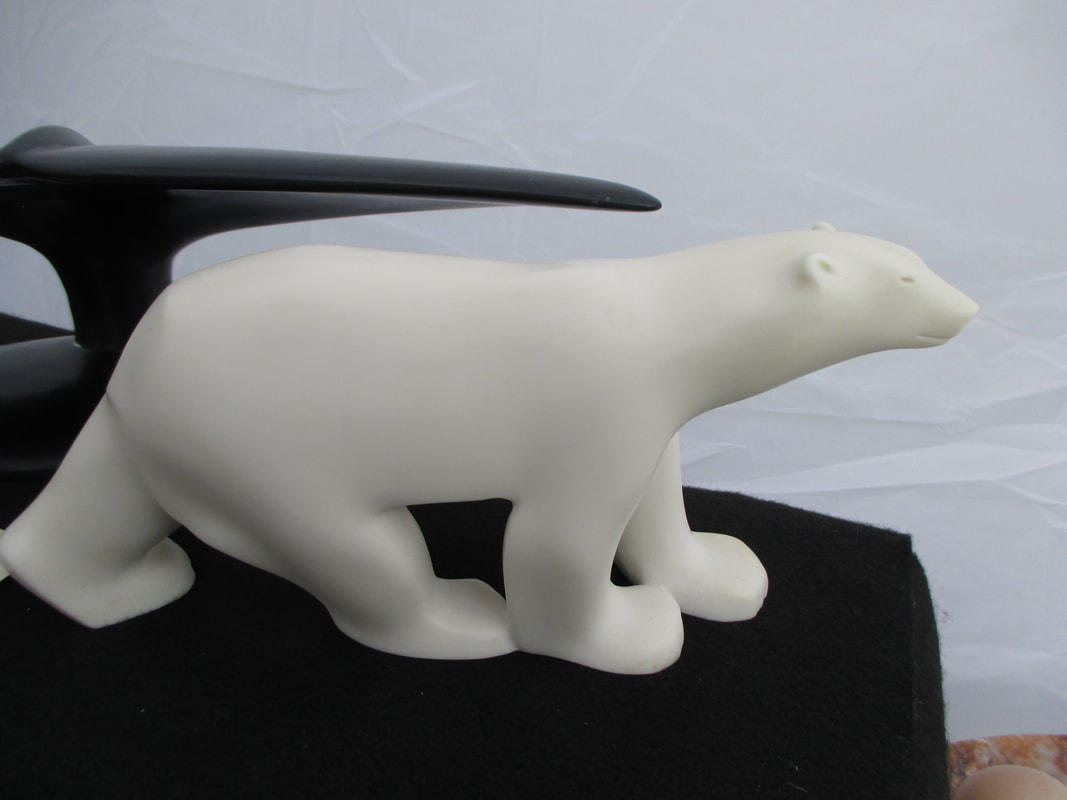
side view - note ear details
|
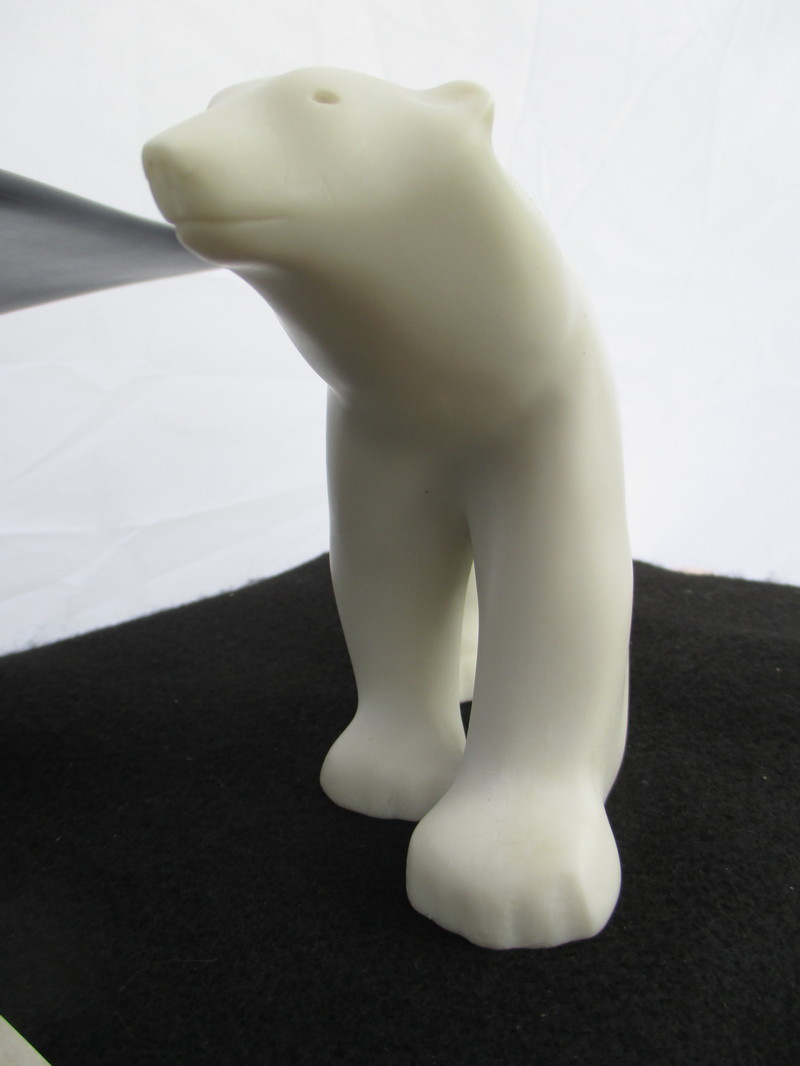
close-up of front view - note face
|
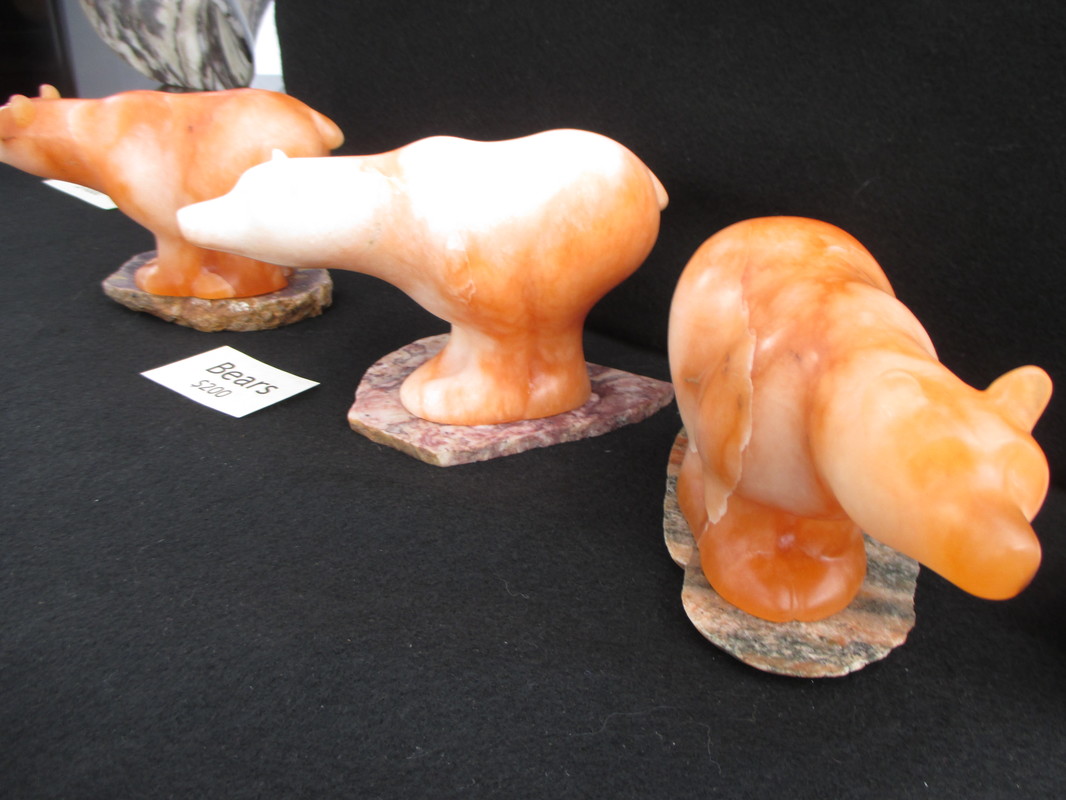
3 red bears - view of legs together
|
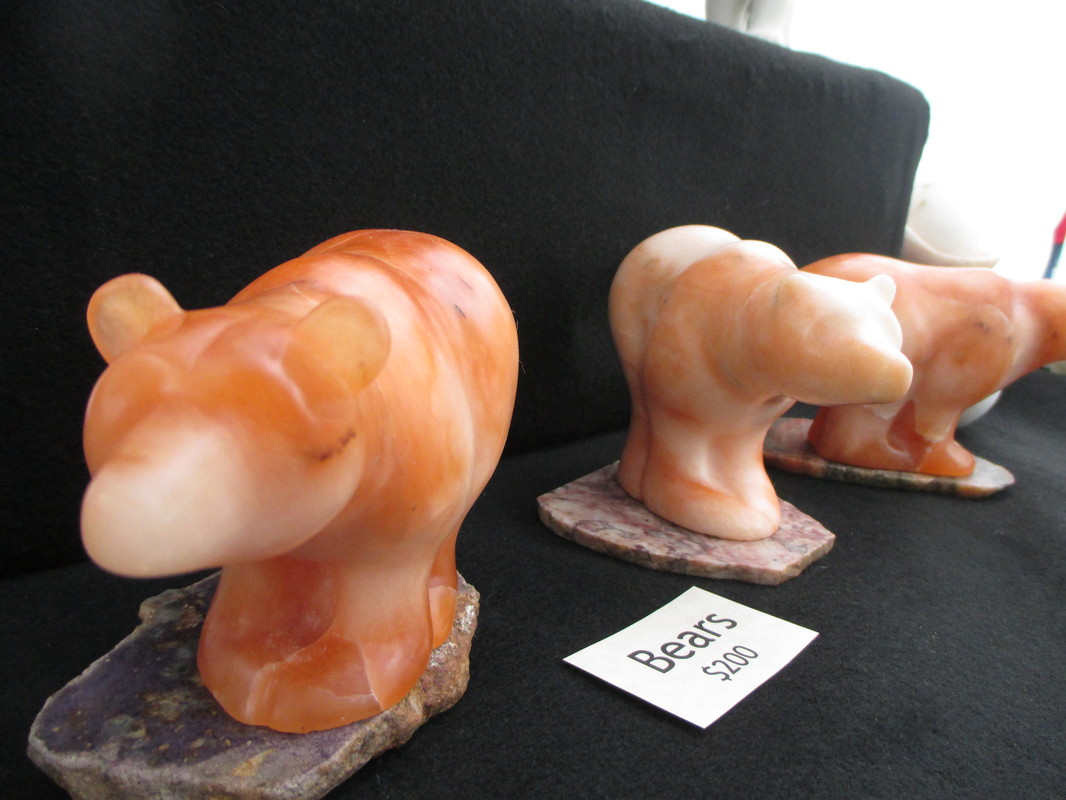
red bears close-up of facial features
|
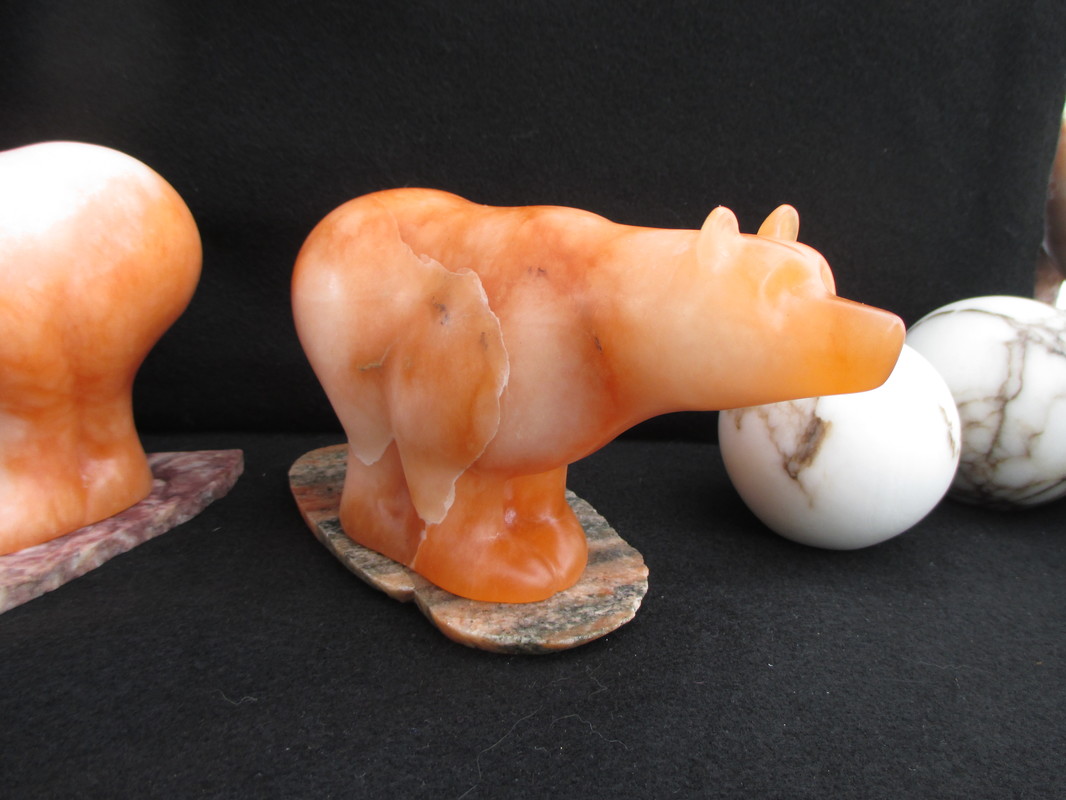
alternate close-up view
|
reference pictures
|
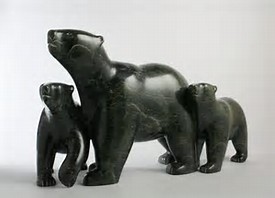
Examples of Inuit Polar Bear carvings. Some of the early Inuit sculptures depict bears.
|
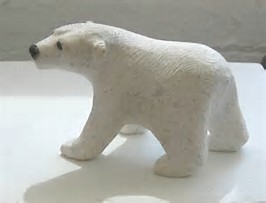
Bear sculpture by Pits Qimirpik - the most famous Inuit artist. Note the rough, hair-like finish.
|
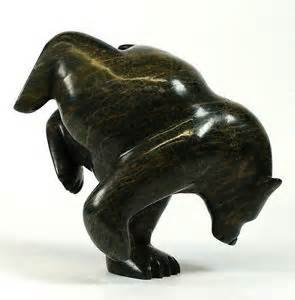
The Dancing Bear sculpture by Ottokie.
|
step-by-step visuals
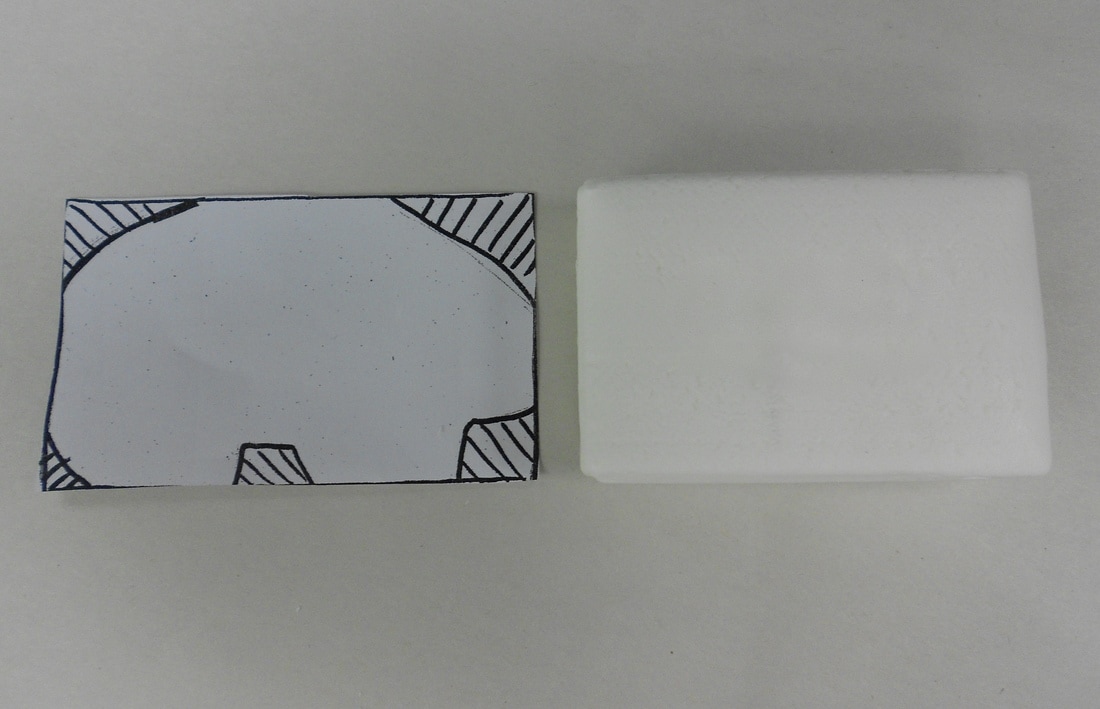
1- make a model/stencil to follow
|
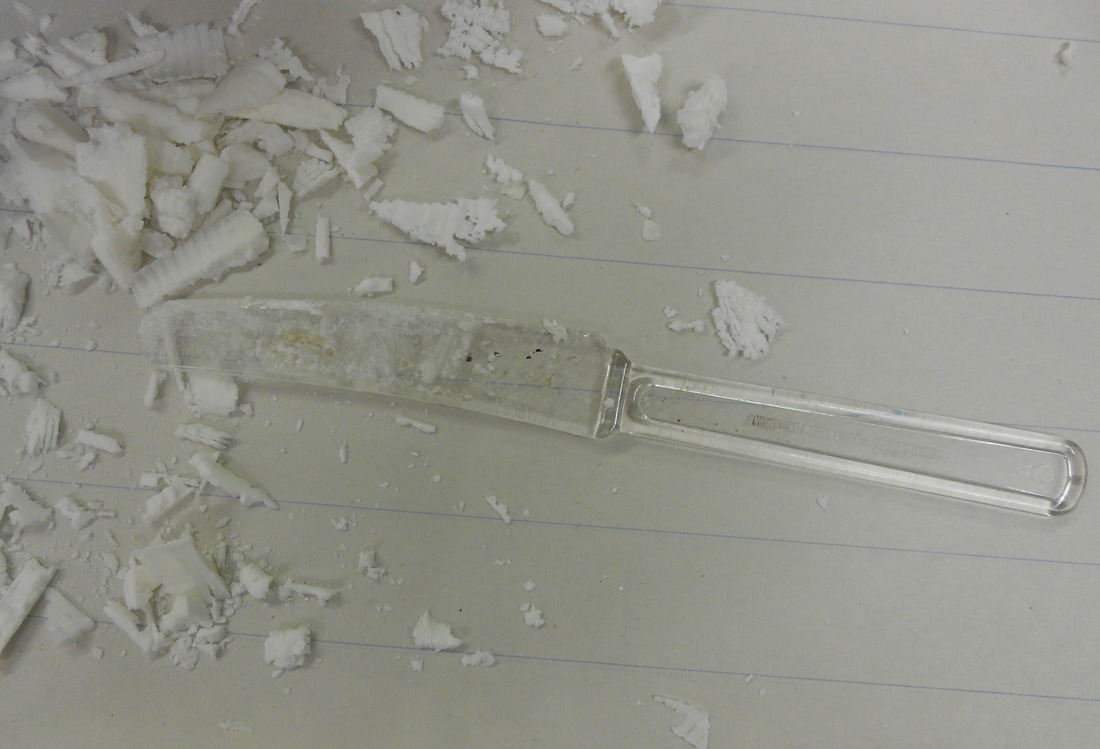
2- plastic knives can be used to carve
|
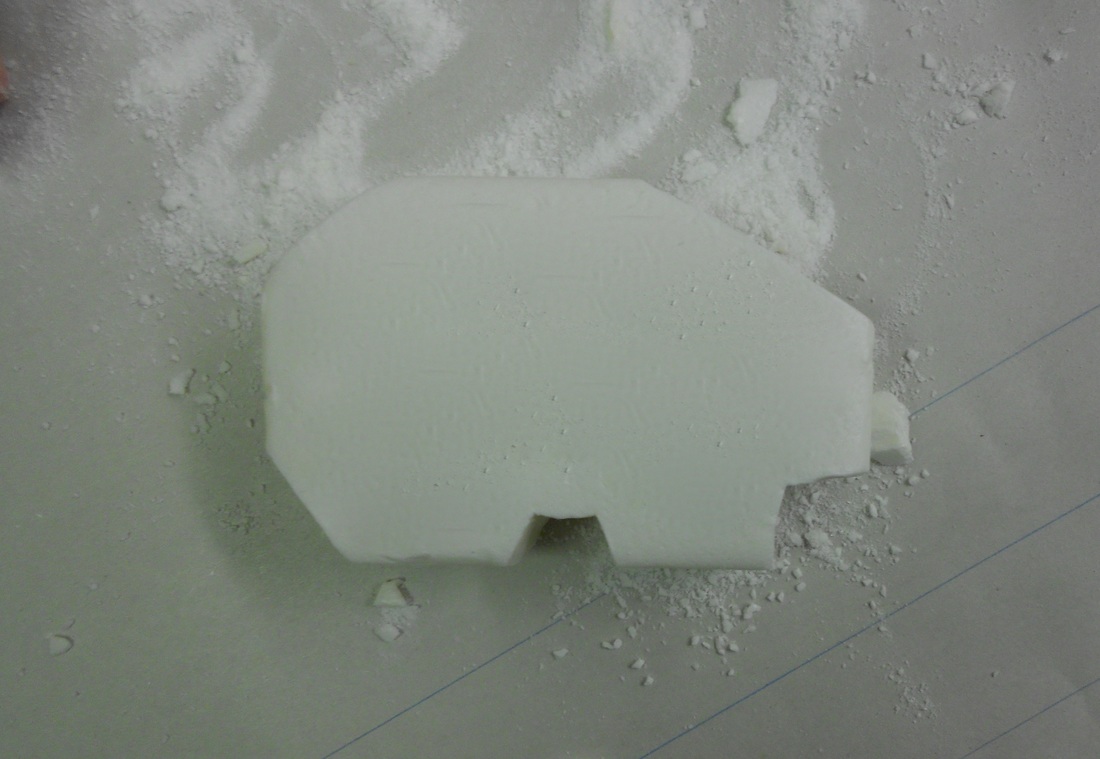
3- cut major sections off
|
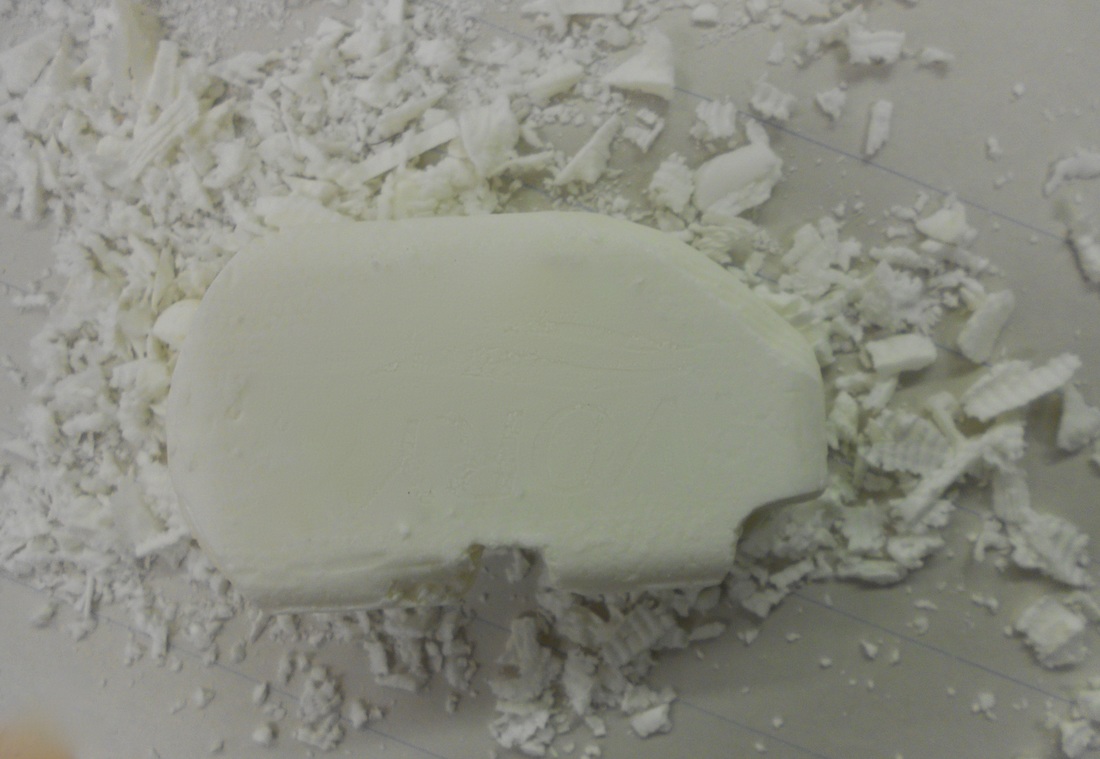
4- round all edges + sides
|
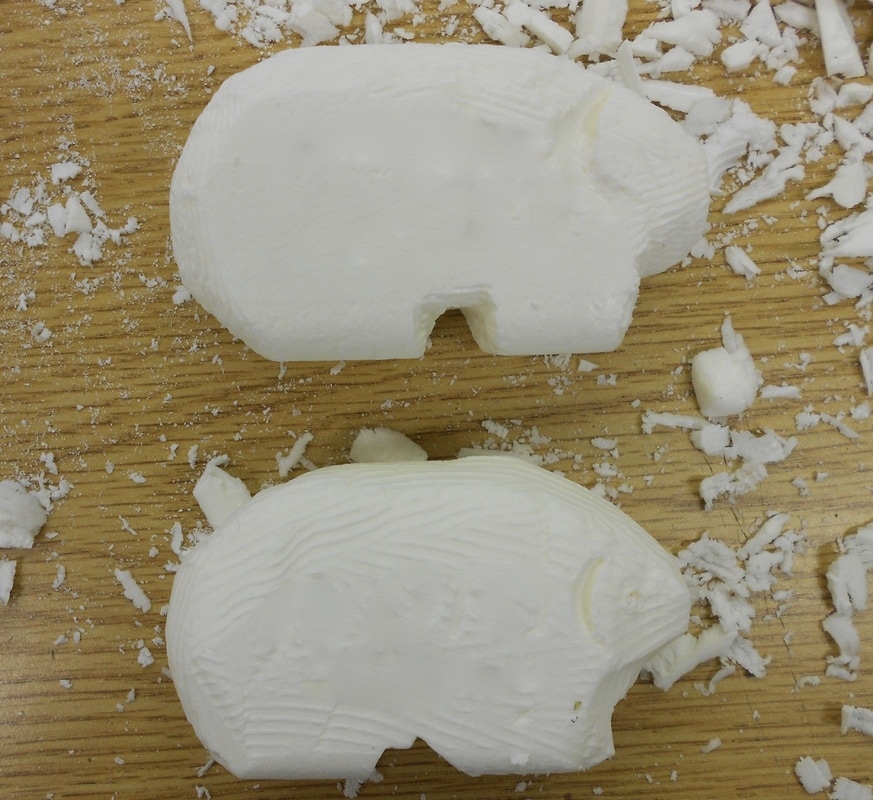
5- notice shape + curvature of finished sculpture - curve between legs
|
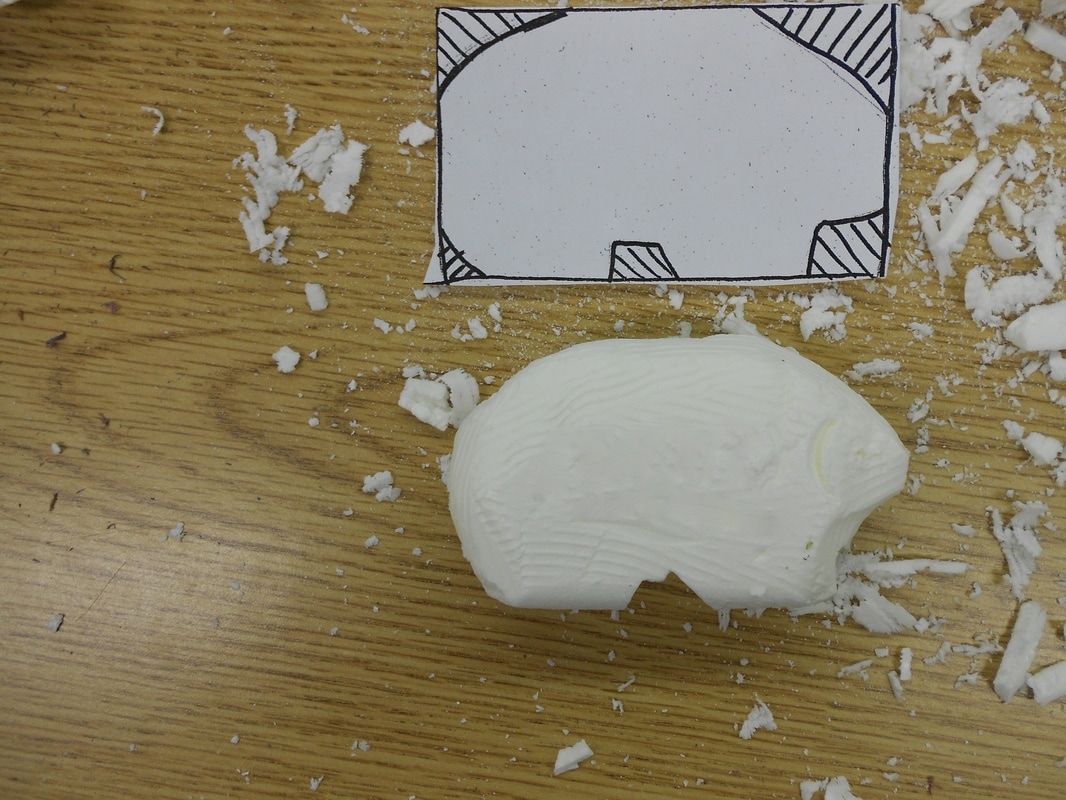
6- continue to curve entire sculpture
|
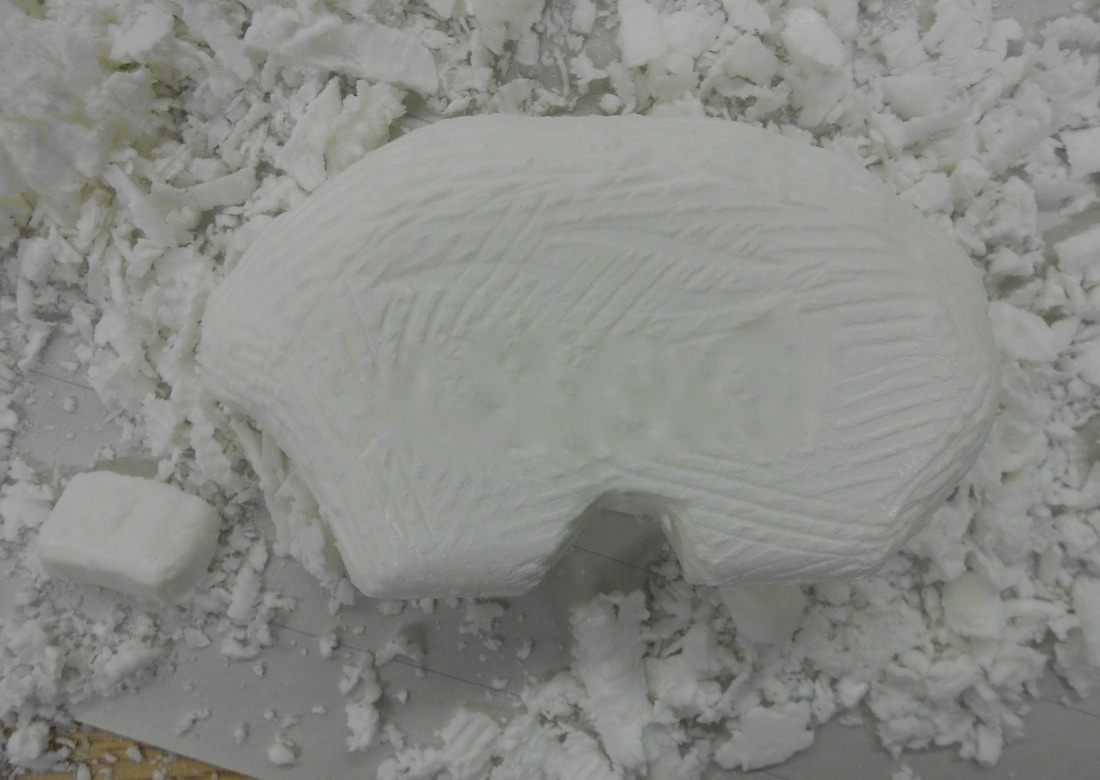
7- continue to round top, sides, back + front
|
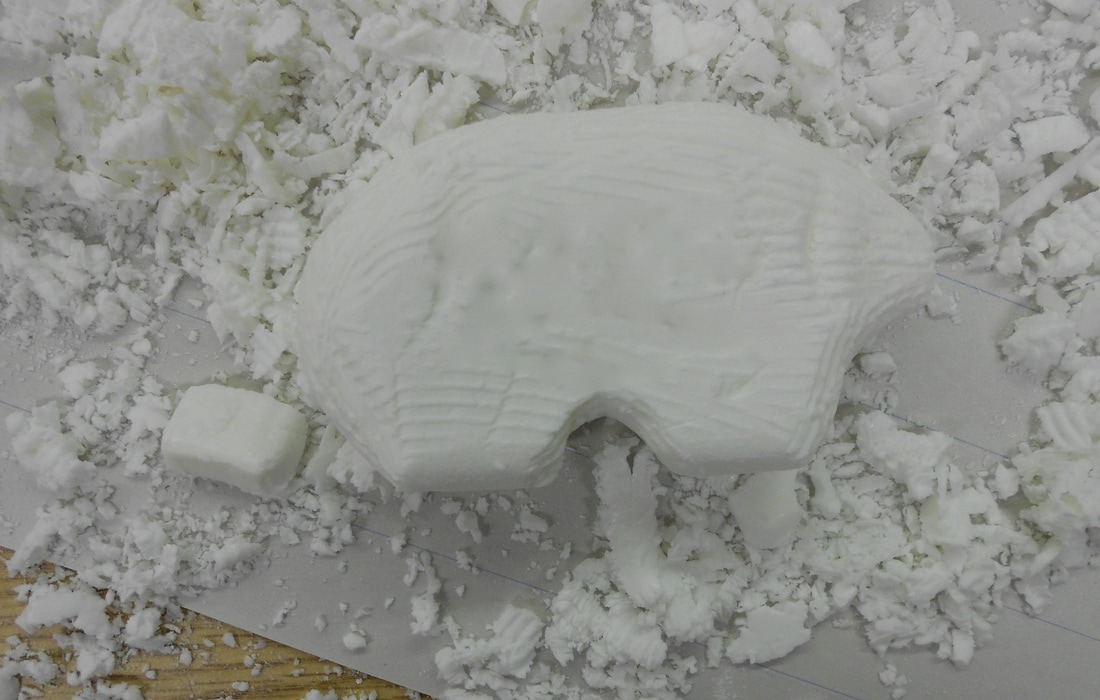
8- the other side of sculpture
|
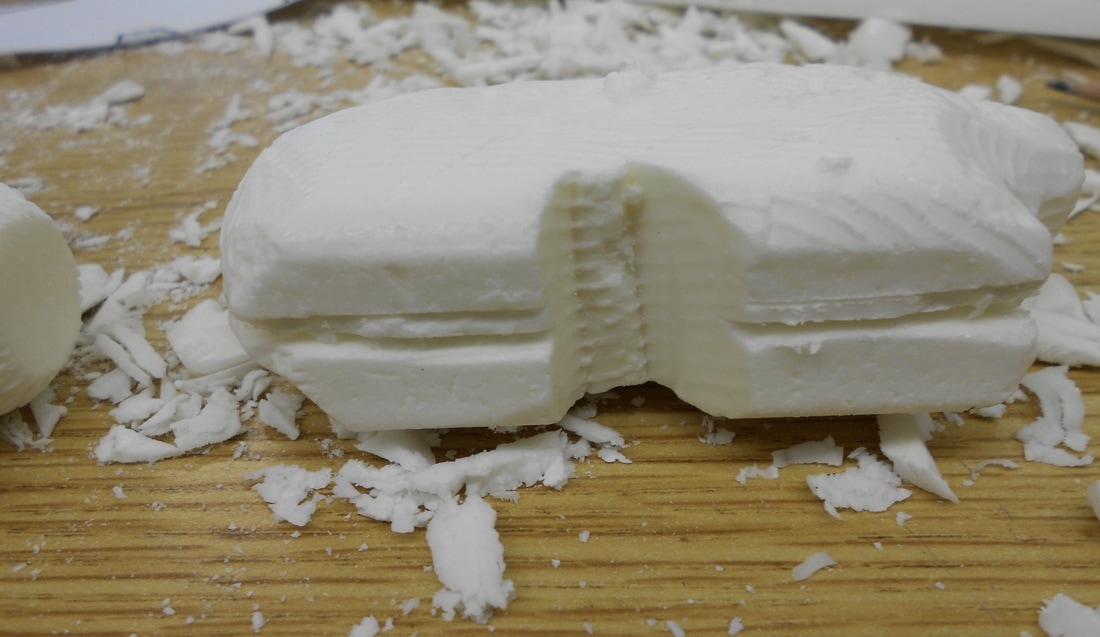
9- separate between legs - this step may be omitted
|
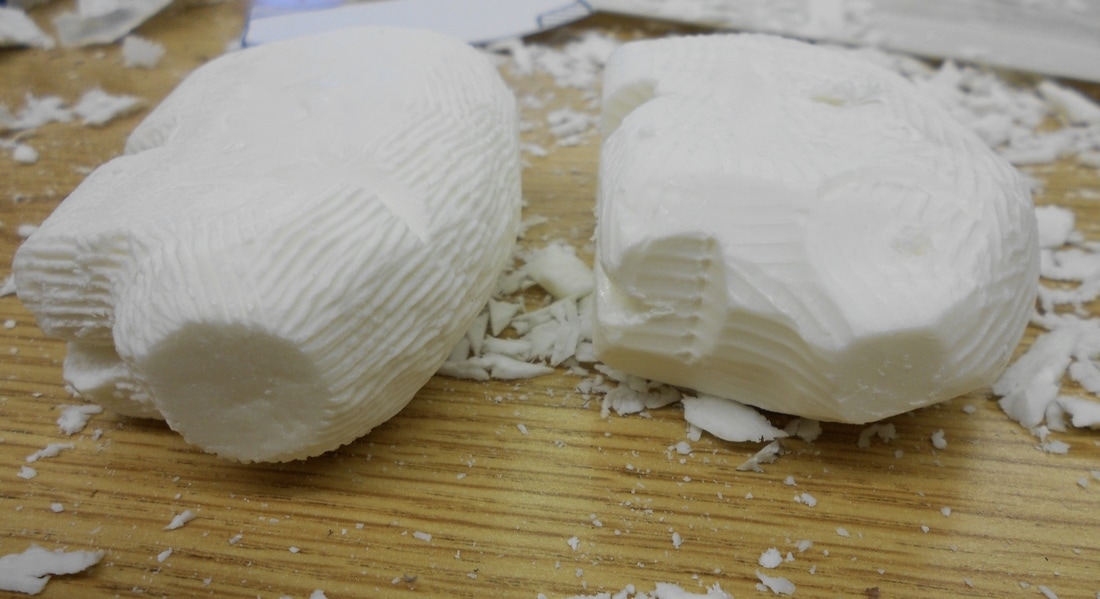
10- narrowing of nose area started - indent under nose/mouth area
|
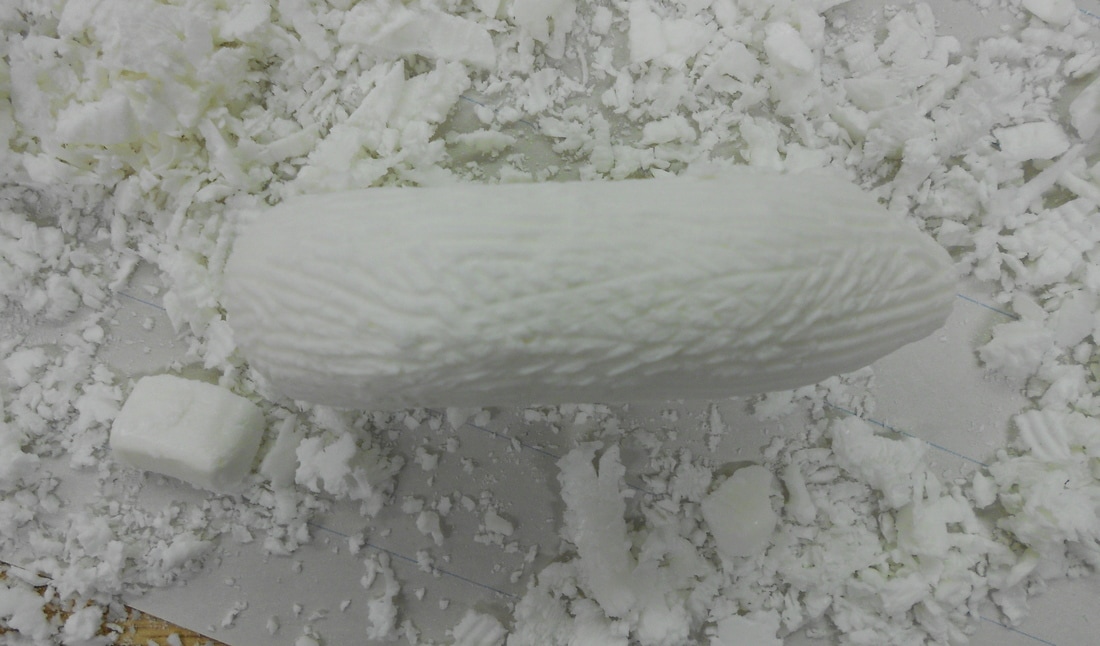
11- view of back - notice curvature/roundness
|
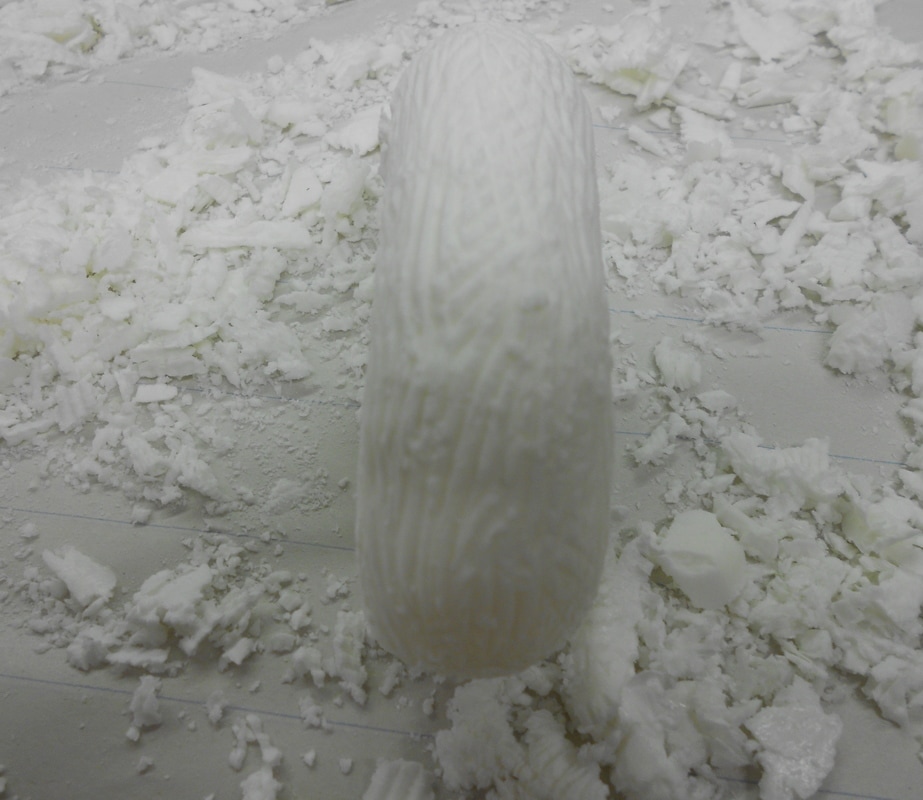
12- close-up view of back
|
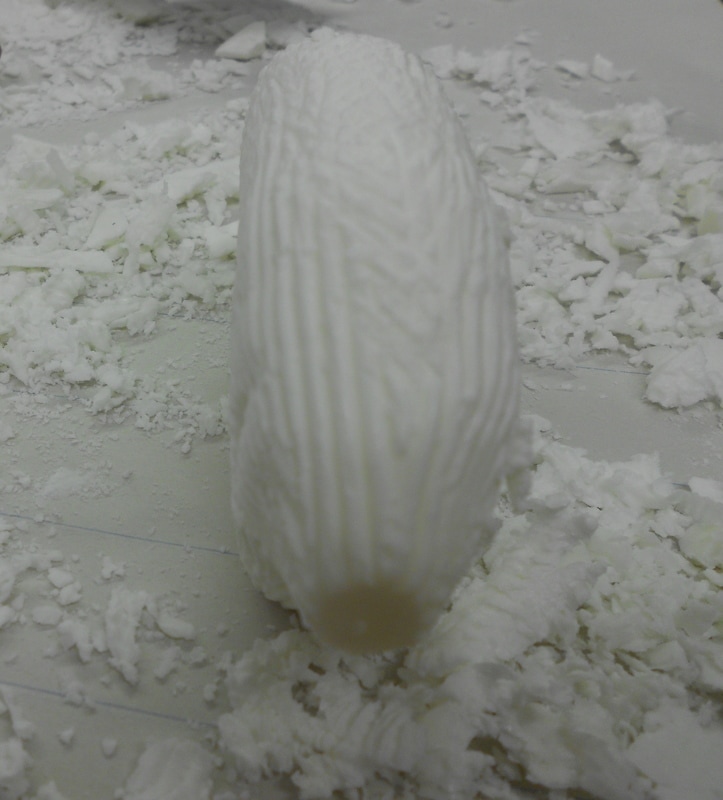
13- a view of the top of tieback of sculpture - notice the roundness
|
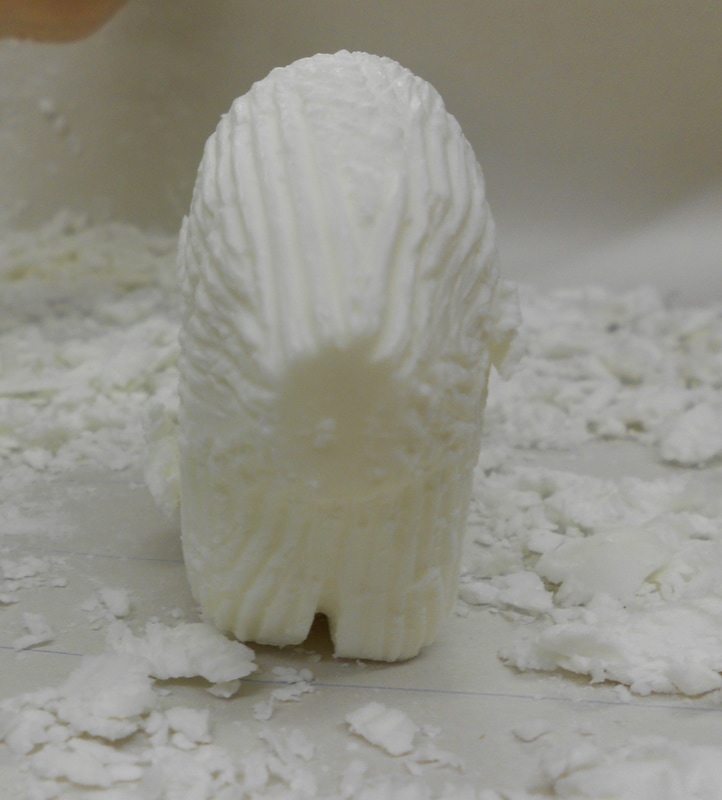
14- notice the narrowing of the nose area
|
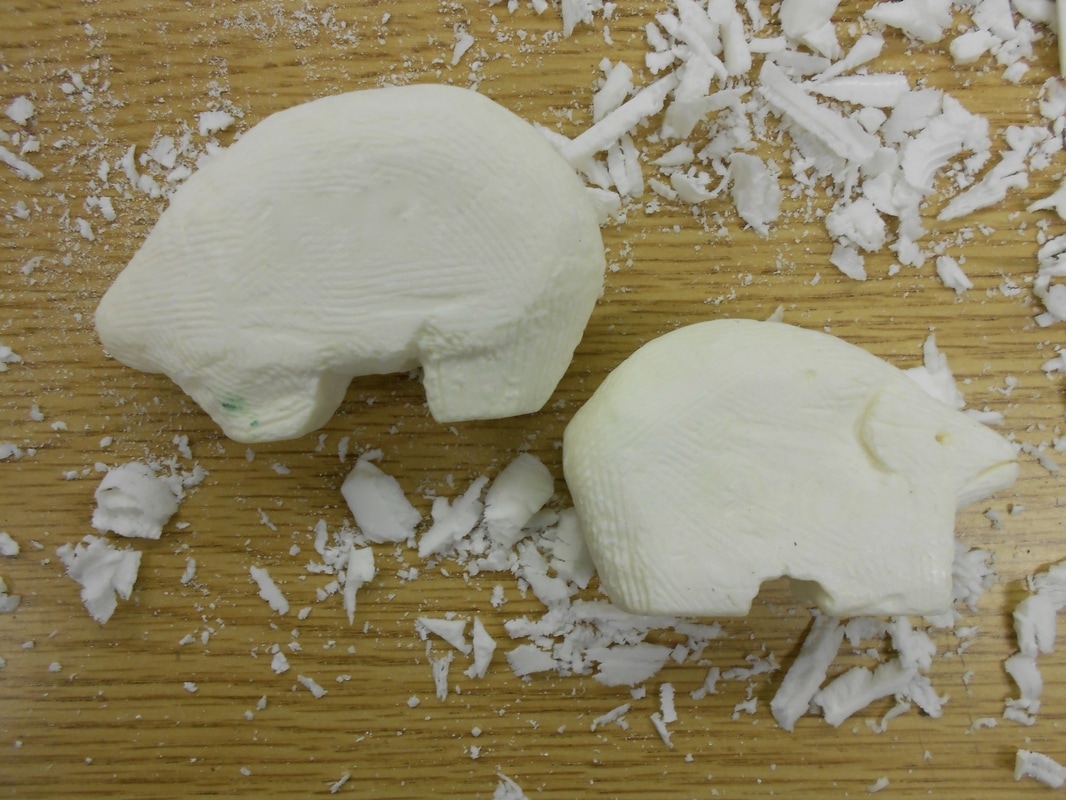
15- define details - notice the indent where the legs are - see details of ears, eye, + mouth - carve with sharpened pencil tip
|
soap carving lesson plan
objective
Students will gain knowledge of the Inuit people + their traditions of carving small sculptures. Students will know what a soap carving is, as well as have working knowledge on how to make one. All students will have a completed soap carving of a polar bear upon lesson completion.
materials
- new bar of a soft, white soap per student, a soft soap
- plastic knives (carving tool)
- paper to cover tables
- reference pictures of polar bears
- white paper for template
- plastic knives (carving tool)
- paper to cover tables
- reference pictures of polar bears
- white paper for template
activity
- demonstrate how to properly hold the soap bar while carving
- templates need to be same size as bar of soap
-using a pencil, trace over the template to draw outlines directly on soap
- always carve away from your body
- remind students even though it is plactic, it is still a knife - use with caution
- follow step-by-step instructions to begin crying soap
- carve small amounts off at a time, do not rush + cut off chunks - avoid deep gouges
- use tool to carve away this layers + small amounts
remember - more soap can always be carved away, but can not be added back
- turn sculptures often to carve/scrape/scratch form all sides + views (top, bottom, front, back + 2 sides)
- this project takes time + patience
- it gets very messy so students might move soap crumbs over to the side every now + then
- OPTIONAL - the soap can be wetter, slightly, to smooth off, but allow to thoroughly dry before handling
- templates need to be same size as bar of soap
-using a pencil, trace over the template to draw outlines directly on soap
- always carve away from your body
- remind students even though it is plactic, it is still a knife - use with caution
- follow step-by-step instructions to begin crying soap
- carve small amounts off at a time, do not rush + cut off chunks - avoid deep gouges
- use tool to carve away this layers + small amounts
remember - more soap can always be carved away, but can not be added back
- turn sculptures often to carve/scrape/scratch form all sides + views (top, bottom, front, back + 2 sides)
- this project takes time + patience
- it gets very messy so students might move soap crumbs over to the side every now + then
- OPTIONAL - the soap can be wetter, slightly, to smooth off, but allow to thoroughly dry before handling
clean-up
1. Project is messy. Leave ample time for clean-up.
3. Collect all plastic knives from students first.
2. Demonstrate how to fold table paper inward to pocket or hold all carving "crumbs".
3. Collect all plastic knives from students first.
2. Demonstrate how to fold table paper inward to pocket or hold all carving "crumbs".
vocabulary words
- Balance - Visual equilibrium in a composition; achieved by organizing the weight and attention of all elements in an artwork. Types of balance are symmetrical, asymmetrical, radial, and crystallographic.
- Contour drawings - The drawing of an object as though the drawing tool is moving along the edges and ridges of the form.
- Form - A three-dimensional volume or the illusion of three dimensions (related to shape, which is twi-dimensional); the particular characteristics of the visual elements of a work of art (as distinguished from its subject matter or content).
- Harmony - The principle of design that combines elements in a work of art to emphasize similarities of separate but related parts.
- Proportion - The size relationships of one part to the whole and of one part to another.
- Scale - The size of an object or image that is measured by its relationship to the other objects and images that are recognized for their normal or actual size.
- Sculpture - A three-dimensional work of art either in the round( to be viewed from all sides) or in bas relief (low relief in which figures protrude slightly from the background).
- Space - An area in which objects or images can exist.
- Shape - A two-dimensional are or plane that may be open or closed, free-form or geometric. It can be found in nature or is made by humans.
- Unity - Total visual effect in a composition achieved by the careful blending of the elements of art + the principles of design.
variation
- Carve a different animal. One native to their community or state.
- Have students carve geometric designs.
- Use leather-hard clay or another type of clay in place of soap.
-Use soapstone or carving foam instead of soap.
- Have students carve geometric designs.
- Use leather-hard clay or another type of clay in place of soap.
-Use soapstone or carving foam instead of soap.
ca state visual arts content standards
3.Historical and Cultural Content
Understanding the Historical Contributions and Cultural Dimensions of the Visual Arts
Role and Development of the Visual Arts
3.1 Compare and describe various works of art that have a similar theme and were created at different time periods.
3.2 Identify artists from his or her own community, country, or state and discuss local or regional art traditions.
Understanding the Historical Contributions and Cultural Dimensions of the Visual Arts
Role and Development of the Visual Arts
3.1 Compare and describe various works of art that have a similar theme and were created at different time periods.
3.2 Identify artists from his or her own community, country, or state and discuss local or regional art traditions.